


WV State Inspection Checklist: What our technicians look for to ensure your VW passes the West Virginia safety scan.
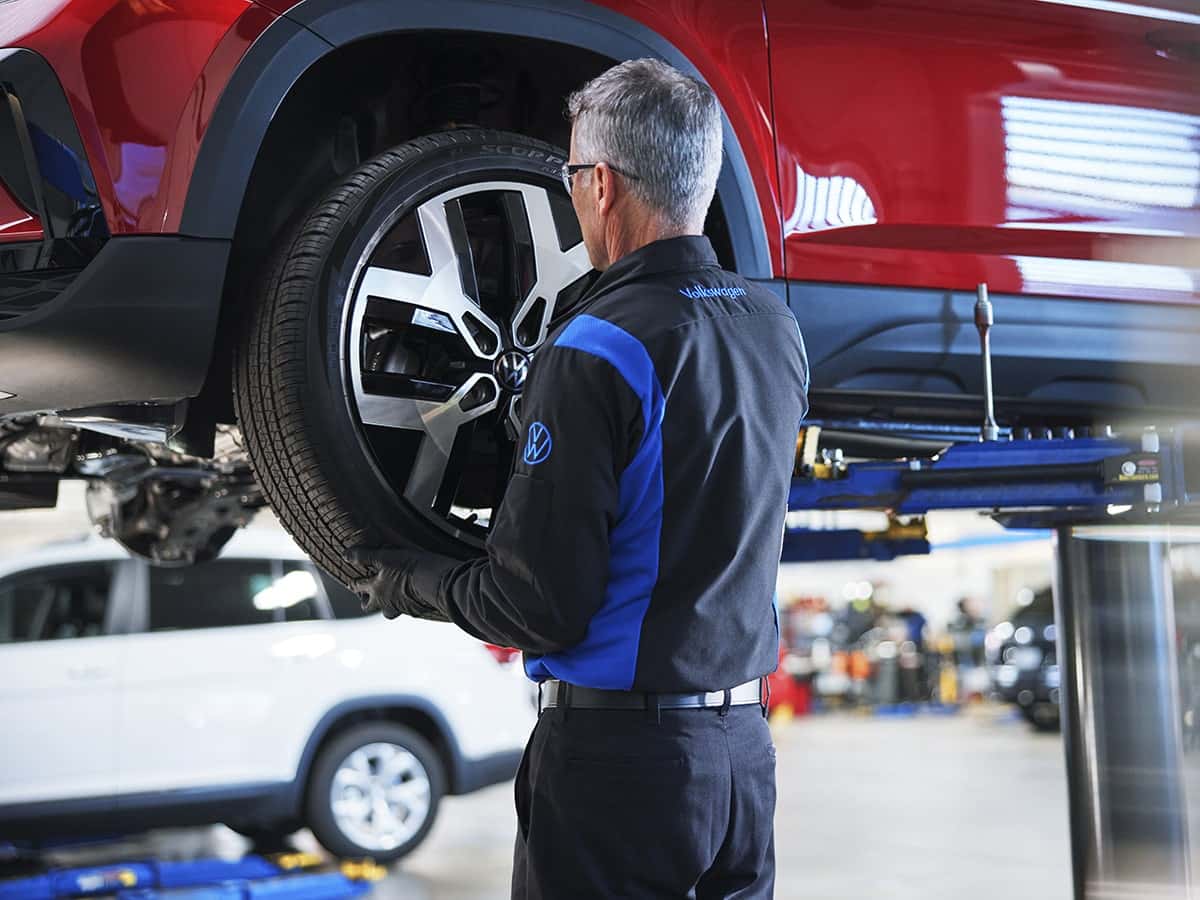
Last October, a 2019 Volkswagen Jetta arrived at our service bay three days before its registration renewal deadline after its owner had put off scheduling the state inspection for two months. The vehicle failed on two counts: a cracked windshield that had been spreading slowly since a rock strike on US-50 near Clarksburg and a right rear brake caliper that had been sticking intermittently for several weeks. The rushed caliper replacement, windshield repair, and re-inspection fee totaled $980. Catching both items at a routine service visit earlier in the year would have cost $340.
West Virginia’s annual safety inspection requirement is one of those ownership obligations that feels like a formality until the vehicle fails and the registration clock is ticking. For Volkswagen owners in the Clarksburg and Bridgeport area, the inspection covers a more comprehensive list of safety systems than most drivers realize, and several of the most common failure points on VW models are items that develop gradually and give plenty of warning before they become inspection failures, if you know what to look for.
Harrison County’s roads and climate create specific wear patterns on the systems West Virginia inspectors evaluate. The elevation changes along US-50, US-19, and WV-279 put consistent demand on brake components. Winter road salt accelerates corrosion on suspension and steering parts. The freeze-thaw cycle that runs through Bridgeport from November through March stresses rubber components in ways that accumulate over multiple winters. Understanding which systems are most likely to need attention on a Clarksburg-area VW before inspection season saves time, money, and the frustration of a failed inspection with a registration deadline approaching.
This guide walks through the major systems West Virginia safety inspectors evaluate, the VW-specific components most likely to generate failure concerns in Harrison County conditions, and how a pre-inspection service visit positions you to pass on the first attempt rather than managing a failed inspection under deadline pressure.
What West Virginia’s Safety Inspection Actually Covers
The Full Scope of the Annual Evaluation
West Virginia’s annual safety inspection is administered through licensed inspection stations and covers a standardized checklist of vehicle safety systems that goes well beyond a quick visual pass. Inspectors evaluate brake system function and component condition, steering and suspension integrity, tire condition and tread depth, lighting systems across all exterior functions, horn operation, windshield condition and wiper function, mirrors, seat belts, and the vehicle’s emissions readiness status as reported by the OBD-II system. Each category has specific pass and fail criteria defined by the West Virginia Division of Motor Vehicles, and a failure in any single category means the vehicle cannot receive its inspection sticker until the item is corrected and a re-inspection is completed.
The emissions component deserves specific attention for Volkswagen owners because it operates differently than a traditional tailpipe emissions test. West Virginia’s OBD-II readiness check reads the vehicle’s onboard diagnostic system to confirm that emissions-related monitors have completed their self-test cycles. A check engine light is an automatic failure, but so is a readiness monitor that has not completed its cycle, which can happen after a battery replacement, a recent diagnostic reset, or insufficient driving cycles following any repair that required clearing fault codes. VW owners who have had recent diagnostic work performed elsewhere and had codes cleared should drive the vehicle through several complete warm-up and cool-down cycles before presenting it for inspection to ensure all readiness monitors have completed.
The Harrison County Factors That Affect Inspection Outcomes
Several environmental factors specific to the Clarksburg and Bridgeport area consistently show up in the inspection items we see needing attention on local VWs. Road salt exposure on US-50, US-119, and the secondary roads through Harrison County accelerates corrosion on brake rotors, caliper slide pins, and suspension ball joints in ways that are more pronounced here than in drier climates. A VW that came from a lower-salt market and has been driven in Harrison County for two or three winters will show undercarriage corrosion progression that an inspector will evaluate closely on brake hardware and suspension components.
The steep grades around Bridgeport and the surrounding county also accelerate front brake wear relative to what flat-market VW owners experience. A Jetta or Tiguan used primarily on the hilly routes between downtown Clarksburg, the US-119 corridor, and the WV-279 approaches will wear front brake pads faster than the mileage-based replacement interval suggests. Owners who service their VW on a mileage schedule without accounting for terrain-based wear sometimes arrive at inspection with brake pads that are below the minimum thickness threshold despite being well within the expected mileage range.
The Systems That Generate the Most VW Inspection Failures
Brakes: The Most Common Failure Category
Brake system failures account for a significant portion of the failed inspections we see on Clarksburg-area Volkswagens, and the reasons are specific to how VW brake components behave in Harrison County conditions. West Virginia inspectors evaluate brake pad thickness, rotor condition, caliper function, brake line integrity, and parking brake operation. On VW models, the rear brake system is particularly worth attention because many Jetta, Golf, and Tiguan models use an electronic parking brake integrated with the rear caliper, and corrosion on the rear caliper’s internal parking brake mechanism is a common failure point that does not always produce obvious symptoms before it fails an inspection.
Caliper slide pin corrosion is another VW-specific concern in high-salt environments. When slide pins corrode and restrict caliper movement, the brake pad wears unevenly across its surface, producing a thin edge on one side while the opposite edge remains relatively thick. An inspection measuring pad thickness at the thinnest point will fail a pad that appears to have adequate life remaining when viewed from outside the wheel. This failure mode is more common on Bridgeport-area VWs than on the same models driven in lower-salt markets, and it develops progressively across multiple winters without producing the obvious brake noise that typically alerts owners to pad wear.
What a failed brake inspection costs:
- Emergency caliper replacement under registration deadline: $420 – $680
- Rotor replacement if corrosion has progressed to failure: $280 – $420
- Re-inspection fee after repair: $15 – $25
- Total if caught at failure: $715 – $1,125
What proactive pre-inspection brake service costs:
- Brake inspection and caliper slide pin service: $89 – $120
- Pad replacement if needed, scheduled on your terms: $280 – $420
- Smart total: $369 – $540
Your potential savings from staying ahead of brake wear: $346 – $585.
Tires and Suspension: The Second Most Common Category
West Virginia’s inspection criteria for tires require a minimum of 2/32 of an inch of tread depth and no visible sidewall damage, bulging, or cord exposure. For VW owners in Harrison County, the more common suspension-related failure involves worn ball joints and tie rod ends that develop play beyond the inspection threshold after multiple winters of corrosion exposure. These components do not always produce obvious handling symptoms before they reach the inspection failure threshold, which is why a pre-inspection suspension check on a higher-mileage VW is worth including as a standard part of the pre-inspection preparation.
Windshield condition is evaluated for cracks that fall within the swept area of the wipers or within the driver’s primary field of vision. Rock strikes are a frequent occurrence on US-50 and US-19 in Harrison County, and a chip that has been sitting untreated for several months in West Virginia’s freeze-thaw conditions often develops into a spreading crack that moves from a repairable chip to a full windshield replacement between the time it occurred and the time the owner schedules their inspection. On VW models equipped with EyeSight-equivalent camera systems mounted to the windshield, a replacement also requires ADAS recalibration, which adds to the cost of waiting on a chip repair.
A Tiguan owner from Shinnston came to us last February with a crack that had started as a small chip on US-50 the previous November. Cold temperatures had spread it across the lower driver’s side of the windshield into the primary viewing area over the winter. The windshield replacement and camera recalibration for the front assist system ran $890. A chip repair in November, before the freeze-thaw cycle spread it, would have been $75.
Lighting, Wipers, and the Items Owners Overlook
The lighting evaluation covers headlights, taillights, brake lights, turn signals, reverse lights, license plate illumination, and hazard function. On higher-mileage VW models, the items that most commonly generate lighting failures are license plate bulbs, which are easy to miss because they are not visible during normal driving, and brake light bulbs in the third center brake light position, which owners rarely check independently. Both are inexpensive bulb replacements that become inspection failures when they are discovered by an inspector rather than caught during a pre-inspection walkthrough.
Wiper condition is evaluated for the swept area clarity and blade integrity. Harrison County’s winters are hard on wiper blades, and blades that performed adequately through the winter season on snow and ice typically show streaking and skipping by spring inspection season that puts them at the threshold of an inspection concern. Replacing wiper blades before inspection is one of the lowest-cost preparation steps available and one of the more commonly overlooked ones.
“The items that surprise people most at inspection are the small ones they walk past every day without noticing,” says Patricia Holbrook, VW Service Advisor at the Lodgeville Road location. “A license plate bulb, a cracked wiper blade, a chip that spread over the winter. None of them are expensive to fix before inspection, but they become a failed sticker and a re-inspection fee when they show up on the inspector’s clipboard instead of ours. We catch all of them during a pre-inspection check, and that visit pays for itself every time.”
Your 30-Day Pre-Inspection Preparation Check
This week: Walk around your vehicle and evaluate the obvious items yourself. Check every exterior light by walking around the vehicle with a helper pressing the brake pedal, activating turn signals in both directions, and switching between low and high beams. Look at your windshield carefully in morning light for any chips or cracks that have developed or spread since your last inspection. Check your wiper blades by running them on a wet windshield and noting any streaking or skipping across the primary viewing area. This fifteen-minute walkthrough identifies the items most likely to generate a quick inspection failure before a technician needs to be involved.
Within two weeks: Check your tire tread depth and condition on all four corners. Use a quarter inserted upside down into the tread grooves to verify you are above the 2/32 minimum across the full tread width of each tire. Look at the sidewalls for any bulging, cracking, or damage from curb contact on Bridgeport’s tighter residential streets. Uneven wear across the tread width on any tire indicates an alignment or inflation issue worth addressing before inspection, since it can produce a localized thin spot that falls below minimum depth even when the center tread appears adequate.
By month’s end: Schedule a pre-inspection service visit at Volkswagen Clarksburg. Bring your VW in before your registration deadline rather than at it. Our technicians will evaluate every system on the West Virginia inspection checklist, identify any items that need attention, and give you a clear picture of what your vehicle needs to pass on the first attempt. Scheduling the repair on your timeline is consistently less expensive and less stressful than managing a failed inspection under a registration deadline with a re-inspection fee already on the bill.
These three steps take less than two hours of your time and replace the uncertainty of showing up at an inspection station with a vehicle that has not been evaluated with the confidence of knowing exactly where your VW stands before the inspector does.
The Right Way to Approach Inspection Season
The Jetta owner from the opening came back to us the following August, well ahead of his registration renewal, and scheduled a pre-inspection check as his first step rather than his last. We found a wiper blade that needed replacement and a front brake pad that was approaching the minimum thickness threshold, addressed both during the same visit, and he passed his inspection on the first attempt two weeks later. The total cost of the pre-inspection visit and the two items it caught was $210. The previous year’s failed inspection and rushed repairs had cost him $980.
West Virginia’s annual safety inspection is not going anywhere, and Harrison County’s roads and winters will continue creating the specific wear patterns that generate the most common failure items on Bridgeport-area Volkswagens. Treating the inspection as a destination rather than a deadline is the straightforward approach that saves money, reduces stress, and keeps your VW legal and safe on US-50 and beyond.
When you are ready to prepare your Volkswagen for West Virginia’s annual safety inspection, the service team at Volkswagen Clarksburg, located at 730 Lodgeville Rd, Bridgeport, WV 26330, is ready to walk through every inspection item before the inspector does. Scheduling is available online or through the service department. A VW that passes on the first attempt is the least expensive and least stressful version of inspection season, and that outcome starts with knowing where your vehicle stands before the deadline arrives. 🔍
0 comment(s) so far on WV State Inspection Checklist: What our technicians look for to ensure your VW passes the West Virginia safety scan.