


Winter to Spring Tire Swap: When Should Clarksburg Drivers Change Tires?
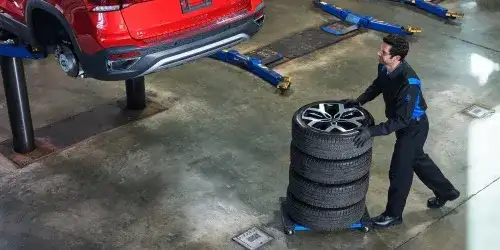
Three weeks ago, a 2023 Volkswagen Tiguan arrived at our Lodgeville Road service center with premature tire wear after the owner left winter tires on through an entire West Virginia summer. The aggressive tread pattern and soft rubber compound designed for snow had worn down 50% faster than all-season tires would have, requiring replacement at just 18,000 miles. The new all-season tire set cost $1,100. The simple spring tire swap they should have done in April? $80, plus their winter tires would still have multiple seasons of life remaining.
The seasonal tire change question affects Clarksburg area Volkswagen owners more than many realize. West Virginia’s unpredictable spring weather creates confusion about when to safely make the switch from winter tires back to all-season or summer tires. Change too early and you risk being caught in late-season snow with inadequate traction. Change too late and you’re wearing out expensive winter tires on dry pavement while sacrificing fuel economy and handling.
Understanding the science behind tire compounds, recognizing the true triggers for tire changes, and knowing proper storage techniques helps you maximize tire life while maintaining safety year-round. This isn’t just about following a calendar date. It’s about understanding temperature thresholds, monitoring weather patterns, and making informed decisions based on actual conditions.
If you’re navigating between Bridgeport and Clarksburg, commuting on Route 50 through varying elevations, or dealing with West Virginia’s notorious weather variability, knowing exactly when to swap tires protects both your safety and your wallet.
Understanding Tire Compound Chemistry
The fundamental difference between winter and all-season tires isn’t just tread pattern. It’s the rubber compound chemistry, and this chemistry responds to temperature in specific, measurable ways.
Winter tire compounds remain flexible and provide grip at temperatures below 45 degrees Fahrenheit. The rubber contains higher silica content and uses different polymer chains that resist hardening in cold temperatures. This flexibility allows the tire to conform to road surface irregularities and maintain grip on cold, icy, or snow-covered roads.
However, this same soft compound that excels in cold weather becomes a liability in warm weather. Above 50-60 degrees, winter tire rubber becomes too soft, wearing rapidly on dry pavement. The aggressive tread blocks designed to bite into snow flex excessively on dry roads, generating excess heat and accelerating wear.
All-season tire compounds provide balanced performance across a wider temperature range but don’t excel at temperature extremes. They begin hardening below 45 degrees, losing significant grip on cold, snow-covered, or icy surfaces. But they maintain better durability and wear resistance in temperatures above 50 degrees.
Summer performance tires (if equipped on sporty VW models like GTI or GLI) use compounds optimized for temperatures above 50 degrees. They provide excellent grip and handling in warm, dry conditions but become dangerously hard and slippery below 45 degrees, even on dry pavement with no snow or ice.
This chemistry determines the 45-degree threshold that serves as the primary tire change trigger. When average daily temperatures consistently exceed 45 degrees, winter tires begin wearing rapidly and should be changed. When average daily temperatures consistently fall below 45 degrees in fall, all-season tires lose effectiveness and winter tires should be installed.
“The calendar date is far less important than actual temperature,” says David Richardson, Service Advisor at our Lodgeville Road location. “We see customers change to summer tires on March 1st because ‘it’s spring’ and then get caught in April snowstorms with completely inadequate tires. We also see customers leave winter tires on until June because they’re afraid of late snow, destroying $800 worth of winter tires in two months of unnecessary wear. The 45-degree average daily temperature threshold is the real trigger, not the date on the calendar.”
The Optimal Spring Tire Change Window for Clarksburg
West Virginia’s spring weather patterns create a specific window for safe tire changes that typically falls mid-April through early May for the Clarksburg area.
Early April often sees daytime highs reaching 60-70 degrees, tempting owners to change tires early. But nighttime lows still drop to 30-40 degrees, and late-season snowstorms remain possible through mid-April. Changing too early risks being caught unprepared.
Mid-April to early May represents the safest window. By April 15-20, average daily temperatures consistently exceed 45 degrees, nighttime lows rarely drop below freezing, and the risk of significant snowfall drops dramatically. This timing allows safe tire changes while preventing excessive winter tire wear.
Monitoring ten-day forecasts in early April helps you identify the right moment. When forecasts show consistent temperatures above 45 degrees with no snow predicted, you can safely schedule the tire swap. Don’t rely solely on the current warm spell. Verify that the forecast shows sustained warmth for at least the next week.
Elevation matters significantly in West Virginia. If you regularly drive to higher elevations (Route 50 toward Aurora, Route 92 toward Helvetia, or mountain areas), consider keeping winter tires on slightly longer than valley residents. Higher elevations see snow and freezing temperatures 2-3 weeks longer than Bridgeport’s elevation.
Your specific driving patterns influence timing too. If you only drive in town at low elevations and can avoid driving during any surprise late snow, you can change tires slightly earlier. If you regularly drive mountain routes or must drive regardless of weather for work, wait until you’re confident winter weather has truly ended.
A healthcare worker from Clarksburg who commutes to United Hospital Center changed to all-season tires on April 5th during an early warm spell. April 18th brought an unexpected 4-inch snowfall. With all-season tires, they struggled significantly during their morning commute, experiencing poor traction and extended braking distances. They’d changed tires two weeks too early based on a temporary warm period rather than sustained temperature changes. Had they waited until late April as we recommend, they’d have avoided the dangerous driving situation entirely.
Signs It’s Time to Change From Winter Tires
Beyond temperature thresholds, several observable signs indicate winter tires should be changed to all-season or summer tires.
Consistent warm days where temperatures stay above 50 degrees all day signal that winter tire compounds are operating outside their optimal range. Monitor your weather app’s hourly forecasts. When you see 5-7 consecutive days with lows above 45 degrees and highs above 55 degrees, it’s safe to schedule the tire change.
Rapid winter tire wear becomes visible when you use winter tires in warm weather. The soft compound wears noticeably faster. If you’re driving on winter tires during a spring warm spell and notice the tread seems to be wearing quickly, change to all-season tires as soon as possible to preserve the remaining winter tire life.
Reduced fuel economy occurs because winter tires have higher rolling resistance than all-season tires, particularly when warm. If you notice your VW’s fuel economy dropped 1-2 MPG without other changes, winter tires on warm pavement may be the cause.
Increased road noise happens when winter tire tread blocks flex excessively on dry, warm pavement. If your VW seems noticeably louder on the highway during spring warmth, the winter tires are telling you they’re ready to come off.
Poor handling in the dry develops when winter tire compounds become too soft in warm weather. If the vehicle feels less responsive, wanders slightly, or doesn’t corner as crisply as usual during warm spring days, the winter tires are operating outside their intended temperature range.
Forecast showing no more freezing nights for the extended 10-14 day outlook provides confidence that winter weather has truly ended. In Clarksburg, this typically occurs in late April. Once the extended forecast shows consistent lows above 40 degrees, winter tire season has ended.
The Danger of Leaving Winter Tires On Too Long
Many owners postpone the spring tire change longer than necessary, often from fear of late-season snow or simply from procrastination. This creates several measurable problems.
Accelerated tread wear is the most obvious issue. Winter tire tread compounds wear approximately 30-50% faster on warm, dry pavement than all-season tires. A winter tire with 40,000-mile life expectancy in cold weather might last only 25,000-30,000 miles if used year-round.
Run winter tires through a West Virginia summer and you’ll see dramatic wear. Tires that should provide 4-5 winter seasons might be worn out after 2-3 seasons if left on from April through October each year. At $800-1,200 per set of winter tires, this represents significant unnecessary expense.
Reduced fuel economy costs real money. Winter tires typically reduce fuel economy by 1-3 MPG compared to all-season tires due to higher rolling resistance and softer compounds. Over a driving season of 10,000-12,000 miles, this costs approximately $150-300 in additional fuel.
Compromised handling affects safety and driving enjoyment. Winter tires on warm pavement don’t provide the crisp handling response that all-season or summer tires deliver. Braking distances increase slightly, cornering feel becomes vague, and overall driving dynamics suffer.
Increased stopping distances on dry pavement occur when winter tire tread blocks flex excessively. While winter tires excel on snow and ice, they actually require 5-10% longer stopping distances on warm, dry pavement compared to all-season tires. This reduces safety during normal spring and summer driving.
A teacher from Shinnston left winter tires on their Jetta from November through August, removing them only when they noticed severe wear. The winter tires, which should have lasted 4-5 seasons, were completely worn out after just two winter seasons and two summers. They’d driven approximately 35,000 miles on tires designed for maybe 40,000 miles in cold weather, but the warm-weather use consumed the tread rapidly. The premature replacement cost them an extra $850 they wouldn’t have spent with proper seasonal tire changes.
Proper Winter Tire Storage
When you remove winter tires in spring, proper storage extends their life and ensures they’re ready for next winter.
Clean the tires thoroughly before storage. Road salt, brake dust, and grime left on tires can deteriorate rubber over the storage period. Use mild soap and water, rinse completely, and allow them to dry fully before storage.
Inspect for damage while they’re off the vehicle. Look for cuts, punctures, bulges, or unusual wear patterns. Address any damage before next winter. Check tread depth using the quarter test: insert a quarter with Washington’s head upside down. If you can see the top of his head, the tire has less than 4/32″ remaining and should be replaced before next winter.
Store tires in a cool, dry, dark location. Ideal storage temperature is 50-70 degrees Fahrenheit. Avoid locations with temperature extremes, high humidity, or direct sunlight. UV exposure and heat accelerate rubber degradation even when tires aren’t being used.
Avoid storing tires outdoors or in non-climate-controlled sheds. Temperature cycling, moisture, and UV exposure dramatically reduce tire life. A basement, interior garage space, or climate-controlled storage unit provides ideal conditions.
Store tires mounted on wheels differently than unmounted tires. If your winter tires are mounted on dedicated wheels (recommended), you can stack them horizontally or hang them on wall hooks. Reduce tire pressure to approximately 15-20 PSI before storage to reduce stress on the tire structure.
Store unmounted tires standing upright rather than stacked. Stacking unmounted tires can cause flat spots or deformation in the lower tires. Stand them upright and rotate their position monthly if possible to prevent flat spotting.
Use tire storage bags designed to protect tires from light, dust, and moisture. These bags cost $20-40 and significantly extend tire life during storage. Simple large garbage bags work if commercial tire bags aren’t available, though they’re less durable.
Consider professional tire storage offered by many service centers. For approximately $80-120 per season, the facility stores your tires in climate-controlled conditions, eliminating the need to find storage space at home. They also inspect tires before storage and again before reinstallation.
Mark the tire positions before removal (LF, RF, LR, RR) so you can rotate them when you reinstall next fall. Rotating tire positions annually extends overall tire life.
A contractor from Bridgeport stored their winter tires in an outdoor shed for three summers. When they reinstalled them the fourth winter, two tires showed severe dry rot cracking from temperature cycling and UV exposure through the shed’s windows. Both tires failed safety inspection and required replacement at $400. Proper climate-controlled indoor storage would have prevented this entirely.
When Fall Tire Change Should Happen
Understanding spring tire change timing also helps you plan fall installation correctly.
Late October through mid-November represents the ideal window for installing winter tires in the Clarksburg area. This timing ensures winter tires are on before the first significant snow while avoiding excessive warm-weather wear in early fall.
Monitor the 45-degree threshold in fall just as you do in spring. When average daily temperatures consistently fall below 45 degrees, it’s time for winter tires. In Clarksburg, this typically occurs in early to mid-November.
Don’t wait for the first snow to install winter tires. By the time snow arrives, appointment availability becomes limited and you risk being caught with inadequate tires. Install winter tires when temperatures indicate they’re appropriate, not when weather forces your hand.
All-season tire performance below 45 degrees declines significantly even on dry pavement. The rubber hardens, reducing grip during acceleration, cornering, and particularly braking. Installing winter tires in late October or early November provides safety benefits even before snow arrives.
The Cost-Benefit Analysis of Dedicated Winter Tires
Many Volkswagen owners question whether dedicated winter tires are worth the investment and hassle of seasonal changes. The analysis strongly favors winter tires for West Virginia drivers.
Safety improvement is measurable and dramatic. Winter tires reduce stopping distances on snow-covered roads by 25-35% compared to all-season tires. On ice, the difference can exceed 50%. These aren’t marketing claims; they’re tested, verified performance differences.
Cost comparison over time favors winter tires:
- Winter tire set on dedicated wheels: $1,000-1,400 initial investment
- Annual tire change service (2x per year): $160
- Winter tire life: 4-6 seasons with proper use and storage
- All-season tire life: 5-7 seasons (extended because they’re only used 7-8 months annually instead of year-round)
Total cost over 5 years:
- Winter tire system: $1,200 initial + $800 changeover service = $2,000
- Single set all-season year-round: $900 initial + $900 replacement at year 3 = $1,800
The difference of $200 over 5 years (approximately $40 annually) buys dramatically improved winter safety and better summer performance from fresher all-season tires. Most drivers consider this excellent value.
Insurance discounts are available from some insurers for vehicles equipped with winter tires. Verify with your insurance provider. Discounts typically range from 3-5% on collision coverage, potentially $50-100 annually.
Dedicated wheels for winter tires cost $400-700 for a set of steel wheels but eliminate the need for mounting/dismounting tires seasonally. This reduces tire change cost from $120-160 (dismount/mount/balance) to $80 (simple wheel swap) and eliminates the tire damage risk from repeated mounting.
All-Season vs Winter Tire Performance Reality
Understanding actual performance differences helps you make informed decisions about tire choices.
Dry pavement below 45 degrees: Winter tires provide 10-15% shorter stopping distances than all-season tires due to rubber compounds staying flexible in cold.
Wet pavement below 45 degrees: Winter tires provide 15-20% shorter stopping distances and significantly better hydroplaning resistance than cold, hardened all-season tires.
Snow-covered roads: Winter tires provide 25-35% shorter stopping distances, dramatically better acceleration traction, and superior cornering grip compared to all-season tires.
Ice: Winter tires provide 50%+ better grip than all-season tires, though both struggle on ice. The difference between inadequate and barely adequate is still significant for safety.
Dry pavement above 60 degrees: All-season tires provide 5-10% shorter stopping distances than winter tires due to firmer compounds and less tread block flex.
These performance differences matter during real-world driving in West Virginia. The difference between stopping before the intersection and sliding into cross-traffic often comes down to 10-15 feet, exactly the advantage winter tires provide in cold weather.
Your 30-Day Tire Change Action Plan
This week: Check the current condition of your winter tires if they’re currently installed. Measure tread depth using the quarter test on all four tires. If depth is approaching 4/32″ (you can see the top of Washington’s head), plan to replace them before next winter. Check the 10-day forecast and note when consistent temperatures above 45 degrees are expected. If the forecast shows sustained warmth, schedule your tire change appointment for 1-2 weeks out.
Within two weeks: If you don’t have dedicated wheels for winter tires, consider purchasing a set before next fall. Steel wheels cost $400-700 and pay for themselves in 2-3 seasons through reduced tire change costs and eliminated mounting/dismounting wear. If your winter tires are stored at home, inspect the storage location for temperature extremes, moisture, or UV exposure. Improve storage conditions if needed before storing this year’s winter tires. Verify you have storage bags or purchase them before tire change day.
By month’s end: Schedule your spring tire change when forecasts confirm consistent warmth. Bring both sets of tires to the appointment if you have them. If you’re storing tires with the service center, confirm they’ll inspect them before storage. After tire installation, verify tire pressure is correct (check door jamb sticker for specification). Drive carefully for the first 50-100 miles on newly mounted tires as the tires seat on the wheels and you adjust to the different handling characteristics. Create calendar reminders for fall tire change (early November) so you’re not caught unprepared when cold weather returns.
Common Tire Change Mistakes to Avoid
Changing based on calendar dates rather than temperature leads to both too-early and too-late changes. March 1st might seem like spring, but West Virginia weather doesn’t follow the calendar.
Mixing tire types by running winter tires on front and all-season on rear (or vice versa) creates dangerous handling imbalances. If you’re using winter tires, use four matching winter tires. Never mix tire types on the same vehicle.
Neglecting tire pressure after installation is common. Different tire types and the seasonal change from cold to warm air require pressure adjustment. Always verify pressure after tire changes.
Improper storage ruins expensive winter tires prematurely. Outdoor storage, temperature extremes, and UV exposure cause deterioration that makes tires unsafe long before the tread wears out.
Waiting too long in spring costs money in accelerated winter tire wear and reduced fuel economy. The “I’ll wait one more week” procrastination often extends into summer.
Installing too early in fall causes unnecessary winter tire wear during warm fall weather. Patience until late October saves winter tire life.
Schedule Your Tire Change Today
That Tiguan owner from the opening who left winter tires on all summer learned an expensive lesson about the cost of improper tire management. After replacing their prematurely worn winter tires for $1,100, they now schedule spring tire changes in mid-April and fall changes in early November, following temperature guidelines rather than convenience or procrastination. They invested in dedicated winter wheels, making changes easier and protecting tire life. Their winter tires are now on their third season with plenty of life remaining.
Proper seasonal tire management isn’t complicated, but it does require attention to temperature patterns, timely action, and proper storage. The investment in seasonal tire changes pays for itself through extended tire life, improved safety, and better fuel economy.
Our certified Volkswagen technicians at 730 Lodgeville Road provide complete tire change services, proper storage, and expert advice on timing based on current weather patterns and forecasts. We’ll inspect both sets of tires during changes, rotate positions to maximize life, and ensure proper installation and pressure.
Schedule your spring tire change today by calling our service department or booking online at Volkswagen Clarksburg, 730 Lodgeville Rd, Bridgeport, WV 26330. We’ll help you time the change correctly based on current weather, inspect your tires for condition, and provide proper storage if needed.
Proper seasonal tire management maximizes tire investment, ensures optimal safety year-round, and provides the right tire for every weather condition. That’s the value proper tire service delivers.
0 comment(s) so far on Winter to Spring Tire Swap: When Should Clarksburg Drivers Change Tires?