


Why Summer Battery Testing Matters in North-Central West Virginia
Key Takeaways
- Summer heat is actually harder on a car battery than winter cold, contrary to what many drivers assume.
- Battery testing during the summer catches weakening batteries before they fail completely once colder weather arrives.
- North-central West Virginia’s temperature swings between hot summer days and cooler nights add extra stress on battery components.
- A battery that fails without warning often gave subtle signs weeks or months earlier that testing would have caught.
Most drivers around Bridgeport and Clarksburg associate battery trouble with winter, picturing a cold morning and a car that won’t start. A summer battery test costs far less than an unexpected tow and replacement battery when the vehicle refuses to start on a hot afternoon or, more commonly, the following winter. Understanding why summer heat is actually the bigger threat to battery health helps owners catch a problem while there’s still time to address it calmly.
Why Summer Heat Is Harder on a Battery Than Winter Cold
It’s a common assumption that cold weather is what kills car batteries, and while a cold morning is often when a weak battery finally fails to start the engine, the actual damage frequently happens months earlier during the heat of summer. High temperatures accelerate the chemical reactions inside a battery, which speeds up both the battery’s normal aging process and the rate at which internal components corrode and break down. A battery that spends a hot North-central West Virginia summer under the hood, where engine bay temperatures can climb well above the ambient outdoor temperature, experiences more cumulative stress than the same battery would during a mild season.
This means a battery that seems to be working fine in July or August may already be significantly weakened by the time the first cold snap arrives in November or December. The cold doesn’t cause the damage. It simply reveals a weakness that summer heat created months earlier, at the exact moment when a battery already operating with reduced capacity needs extra power to start a cold engine.
How Battery Testing Actually Works
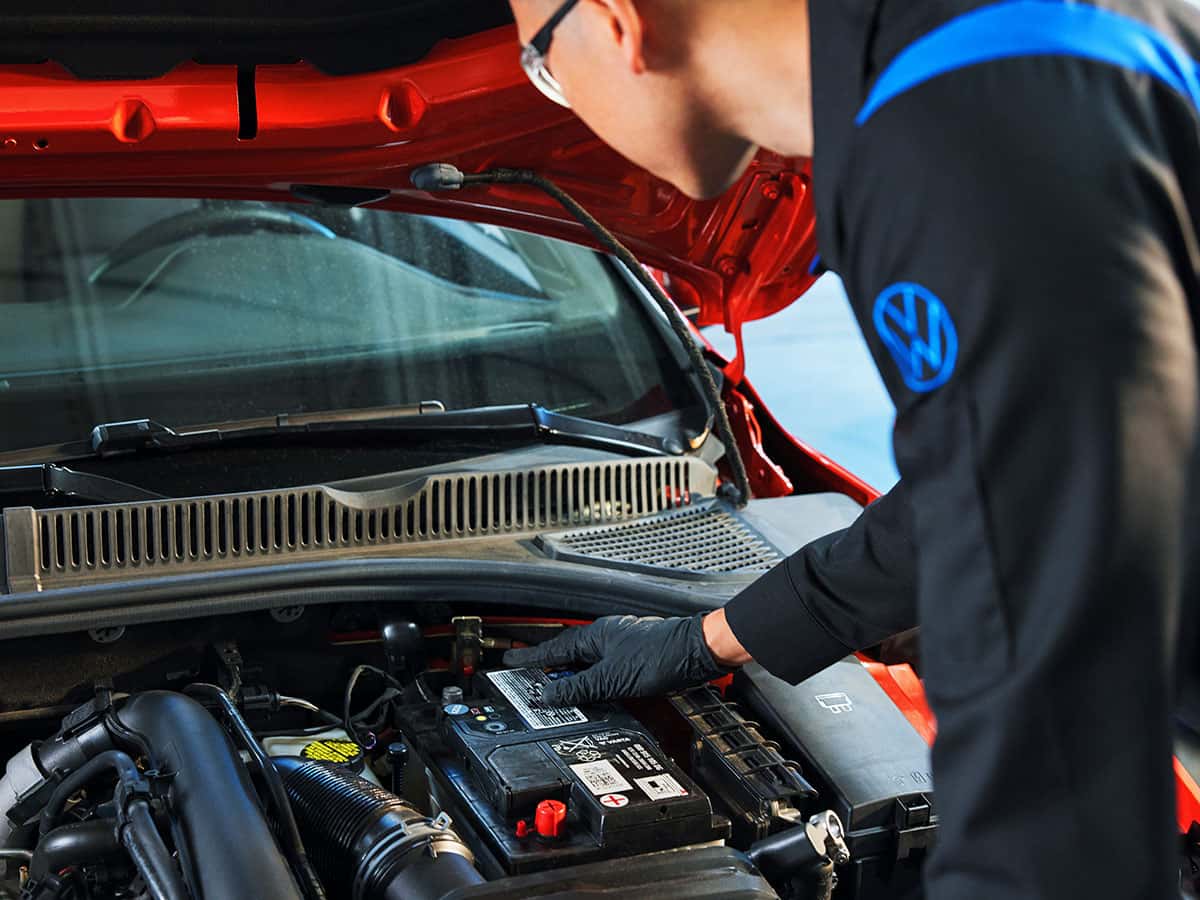
A battery test measures more than whether a battery can currently start the vehicle. Modern testing equipment evaluates a battery’s cold cranking amps, its internal resistance, and its overall state of health compared to what the battery should be capable of when new. This kind of testing can identify a battery that’s gradually losing capacity well before it reaches the point of failing to start the vehicle, which is exactly the window of time when replacement becomes a planned decision rather than an emergency one.
Our technician Trevor Marsh performs battery testing as part of routine service visits throughout the summer, since this is precisely the season when heat related degradation is actively happening, even if the symptoms won’t become obvious until much later. A battery testing as marginal in July gives an owner months of advance notice to plan a replacement on their own schedule, rather than discovering the problem on a cold morning when the car won’t start and there’s no time to shop around or wait for a convenient appointment.
The Freeze Thaw Effect on Battery Terminals and Connections
Beyond the battery itself, North-central West Virginia’s seasonal temperature swings between hot summer days and cooler mornings and evenings can affect the physical connections at the battery terminals. Repeated expansion and contraction from temperature changes can gradually loosen connections or accelerate corrosion buildup at the terminals, both of which reduce the amount of power actually reaching the starter and other electrical components even if the battery itself is otherwise healthy.
A summer inspection typically includes a visual check of the terminals and connections in addition to the electronic testing of the battery itself, since a battery that tests as healthy but has a corroded or loose connection can still cause starting problems that might otherwise be mistaken for a battery replacement issue.
Signs a Battery May Be Weakening
A few signs are worth paying attention to during the summer months, even if the vehicle is currently starting without any noticeable issue:
- Slower than normal engine cranking, even briefly, which can indicate reduced battery capacity before a full failure occurs
- Dimming headlights or interior lights when the engine is idling, particularly noticeable when the air conditioning or other electrical accessories are running
- A battery warning light on the dashboard, which should never be dismissed even if the vehicle still starts normally
- Visible corrosion at the battery terminals, appearing as a white or bluish powdery buildup around the connections
Why Waiting Until Winter Is a Riskier Approach
Many drivers wait until a cold morning starting problem to think about their battery, but by that point, the decision has often already been made for them in the form of an inconvenient breakdown. A battery that’s failing tends to do so gradually, losing capacity over weeks or months of summer heat exposure, but the actual failure often happens suddenly and without much warning once cold weather adds the final demand the weakened battery can’t meet.
Testing during the summer, while the battery is still functioning and there’s no immediate pressure, allows for a much calmer decision making process. An owner who learns their battery is testing marginal in August has time to research options, schedule a convenient appointment, and replace the battery before it becomes an emergency, rather than dealing with a tow truck and a same day replacement on a frigid morning when time and options are both limited.
Building Battery Testing Into a Summer Service Routine
Our service advisor Holly Prunty recommends that Volkswagen owners in the Bridgeport and Clarksburg area add battery testing to their routine summer maintenance visit, treating it as a standard checkpoint rather than something addressed only after a starting problem appears. Because heat related battery degradation happens gradually and often without obvious symptoms, a routine test during the hottest months tends to catch a weakening battery while there’s still time to plan a replacement rather than scramble for one.
She also notes that batteries generally have a typical service life of a few years, and a vehicle approaching or past that age benefits from summer testing even without any current symptoms, simply because the likelihood of age related degradation increases the longer a battery has been in service.
Summer in North-central West Virginia may not feel like the season to think about battery health, but it’s exactly the time of year when the damage that leads to a winter breakdown is quietly taking place. Our team at Volkswagen Clarksburg, located at 730 Lodgeville Rd, Bridgeport, WV 26330 is happy to test your battery as part of a routine summer visit and help you plan ahead before cold weather puts any weakness to the test.
0 comment(s) so far on Why Summer Battery Testing Matters in North-Central West Virginia