


West Virginia Temperature Drops: Battery CCA Load Testing & Cable Terminal De-Corrosion
Key Takeaways
- Cold Cuts Available Power: As temperatures fall, a battery delivers less current exactly when a cold engine needs the most to turn over.
- CCA Is the Number That Matters: Cold cranking amps measure how much starting power a battery can deliver at 0 degrees Fahrenheit, and a replacement should meet or exceed your Volkswagen’s original rating.
- Load Testing Reveals Hidden Weakness: A battery can read a healthy voltage and still fail under the demand of a cold start.
- Corrosion Adds Resistance: Crust on terminals and cable ends chokes current flow and can make a good battery act like a bad one.
- Modern Batteries Need Proper Registration: Many Volkswagen models use battery management software, so a new battery should be installed and registered correctly.
In the hills around Clarksburg, the thermometer does not drop gently. A mild afternoon on US-50 can turn into a frosty morning in a Bridgeport hollow, and your Volkswagen has to wake up with the same confidence either way. The 12 volt battery is the part that makes that happen, and it is also the part most likely to quietly weaken before the first hard freeze. A battery test and a terminal cleaning take a short visit and cost very little, while a dead battery on a frozen morning can cost you a tow, a missed day, and a rushed replacement. Understanding what the numbers mean puts you ahead of the cold.
Why West Virginia Cold Snaps Catch Drivers Off Guard
North Central West Virginia sits in the Appalachian foothills, where elevation and valleys create sharp swings in temperature over short distances. Cold air pools in low areas along the West Fork River and the hollows around Bridgeport, so a driver can wake up to a hard frost while a ridgetop neighbor sees only a chill. Commuters on I-79 and US-19 often notice that the first genuinely cold morning arrives with almost no warning.
That sudden change matters because a battery that coped with warm weather may reveal its weakness all at once. A look at the National Weather Service forecast for our region helps you spot the first overnight freeze, and it gives you a good deadline to have your battery tested before it arrives.
What Cold Does Inside a Car Battery
A lead-acid battery works through a chemical reaction, and cold slows that reaction down. At the same time, cold engine oil thickens, which makes the engine harder to turn. The result is a double hit, because the battery has less to give and the engine asks for more.
Heat also plays a role. A summer of hot engine bays wears down a battery’s internal plates, which reduces its capacity long before winter arrives. When the first freeze comes, a battery that has been slowly fading can run out of reserve in a single morning. This is why many technicians recommend testing a battery in the fall, before the cold exposes the problem.
Understanding CCA and Why It Matters
CCA stands for cold cranking amps, which is a rating of how much current a 12 volt battery can deliver at 0 degrees Fahrenheit for 30 seconds while holding a minimum voltage. A higher number means more starting power in cold conditions. Your Volkswagen was designed around a specific battery size and rating, so a replacement should meet or exceed the original CCA figure and match the specified size and type.
Bigger is not always better, and cheaper is not always safe. A battery with too low a CCA rating may start the vehicle in mild weather and then fail in the cold. Many modern Volkswagen models, including those with start-stop systems, use AGM batteries, which are built to handle frequent restarts and heavy electrical demands. Installing the wrong type can shorten battery life and upset the charging system.
Why a Load Test Beats a Voltage Reading
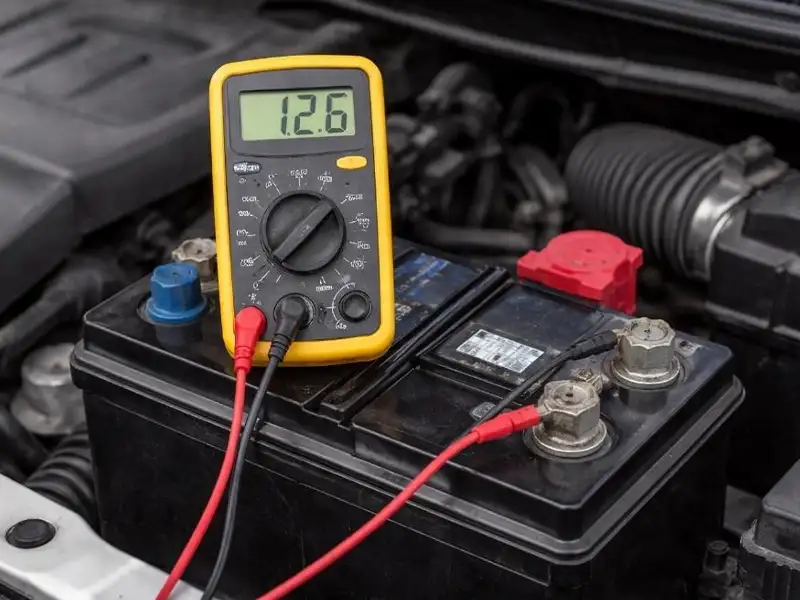
Checking voltage with a meter is quick, but it only shows the battery’s state of charge. A battery can read a healthy 12.6 volts and still collapse the moment the starter draws heavy current. A load test places a controlled demand on the battery, usually based on a portion of its CCA rating, and watches whether the voltage holds up. If it falls too far, the battery cannot be trusted in the cold.
Professional testers can also analyze the battery’s internal condition, and a technician will usually test the charging system at the same time. If the alternator is not charging properly, a new battery will fail the same way as the old one. Testing the whole system is the most reliable way to know what is wrong.
Spotting Corrosion on Terminals and Cable Ends
Corrosion forms when battery gases and moisture react with the metal posts and clamps. It shows up as a white, blue, or green crust that can spread along the cable. In the Mountain State, where damp air and big temperature swings are common, condensation makes this problem worse. Look for these warning signs:
- Crusty Buildup on the Posts: A powdery coating around either terminal means current is struggling to pass cleanly.
- Loose Clamps: A terminal that moves when you gently push it can cause intermittent starting and electrical glitches.
- Swollen or Leaking Case: A bulging or damp battery case suggests internal damage, and the battery should be replaced.
- Frayed or Discolored Cables: Damaged cable insulation or green tint under the sheathing signals corrosion creeping into the wire.
Slow cranking, dim lights at startup, or an occasional warning light can all trace back to poor connections, even when the battery is healthy.
De-Corrosion Done Safely
Cleaning terminals is a simple job, but it deserves care. Battery acid can burn skin and damage clothing, and metal tools can create sparks or a short circuit if they bridge the terminals. Wear eye protection and gloves, keep the engine off, and follow your owner’s manual for the correct procedure.
Disconnect the negative cable first and reconnect it last. A mixture of baking soda and water neutralizes corrosion, and a small brush clears it away. Rinse sparingly, dry completely, and apply a thin coat of terminal protectant or dielectric grease once everything is reconnected and tight. On many Volkswagen models, a battery monitoring system and sensitive electronics make this work better suited to a service team, since disconnecting power can affect settings and the charging strategy.
Registration and Coding After a Battery Replacement
Many Volkswagen vehicles use battery energy management, which adjusts charging based on the battery’s age and condition. When a new battery is installed, the system needs to know about it, and that usually requires a diagnostic tool to register the battery. Skipping this step can cause the vehicle to treat a new battery like an old one, which may shorten its life or limit features such as start-stop.
A battery’s size, type, and CCA rating should match the specification for your model and year. The genuine parts team at Volkswagen Clarksburg can help you find the right battery for your vehicle, which removes the guesswork from an important purchase.
What Cold Weather Battery Care Typically Costs
Pricing depends on the model, battery type, and services needed, so treat this as a general picture and not a quote:
- Load Test and Charging System Check: A small cost that reveals whether the battery and alternator are ready for winter.
- Terminal Cleaning and Protection: A minor service that restores a solid connection and slows new corrosion.
- Battery Replacement with Registration: A larger but planned expense that includes the correct battery and proper setup.
- Cable Repair or Replacement: Needed only when corrosion has damaged the cable, and far cheaper than repeated no-start problems.
- Emergency Roadside Failure: Often adds towing and lost time, which is why testing early pays off.
If you want to see which services are available for your vehicle, the maintenance menu at Volkswagen Clarksburg is a helpful place to start.
Be Ready for the First Hard Freeze
Cold weather is predictable in West Virginia, and so is the way it exposes a tired battery. A load test, clean terminals, and a quick check of the charging system tell you where you stand before the temperature drops. If you would like a professional to test your battery and clean up your connections, the service team at Volkswagen Clarksburg, located at 730 Lodgeville Rd, Bridgeport, WV 26330, United States is ready to help your Volkswagen start strong on every cold morning.
0 comment(s) so far on West Virginia Temperature Drops: Battery CCA Load Testing & Cable Terminal De-Corrosion