


VW Tire Pressure & West Virginia Elevations: Why Your TPMS Light Flashes on Mountain Drives.
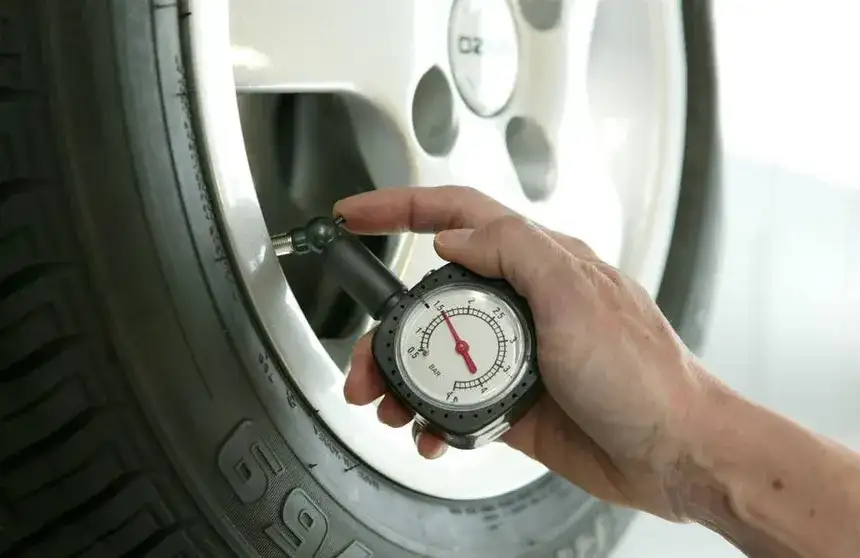
A Volkswagen Jetta owner came into our service bay last month after her TPMS light had appeared and disappeared three times in the same week during her commute between Bridgeport and Elkins on US-33. She had checked her tire pressure each time the light appeared and found nothing dramatically wrong, so she ignored the pattern and continued driving on the assumption the sensor was faulty. What the pressure checks had missed was a slow leak in her passenger rear tire that was being masked by the temperature and elevation changes on the US-33 route. By the time she came in, the tire had lost enough structural integrity from extended low-pressure operation that it required replacement at $185. A sensor diagnostic and proper pressure check at the first warning would have caught the slow leak for $45.
West Virginia drivers see their TPMS warning lights more frequently than drivers in almost any other state, and the reason has less to do with faulty sensors or bad tires than it does with basic physics. The elevation changes between the valley floors in Harrison County and the ridge lines on US-33 east toward Elkins, US-19 south toward Weston, and I-79 between Clarksburg and Morgantown are dramatic enough to produce measurable tire pressure changes within a single drive. When those elevation-driven pressure changes combine with the temperature swings that West Virginia’s seasons produce, Volkswagen owners in the Bridgeport area end up with a TPMS light that behaves in ways that are genuinely confusing if you don’t understand the underlying cause.
At Volkswagen Clarksburg, TPMS-related service questions are among the most frequent we receive, particularly from drivers who use the mountain routes regularly and have noticed the light’s tendency to appear and disappear without an obvious explanation. Understanding why it behaves that way, what it is actually telling you, and when to act on it versus when the situation is self-resolving is the information every Bridgeport and Clarksburg area VW owner needs before the next mountain drive.
The Physics Behind Elevation and Tire Pressure
Tire pressure is measured as the difference between the air pressure inside the tire and the atmospheric pressure outside it, which is what the term PSI, pounds per square inch, actually represents in this context. At sea level, atmospheric pressure is approximately 14.7 PSI. At 3,000 feet of elevation, atmospheric pressure has dropped to approximately 13.2 PSI. That 1.5 PSI reduction in atmospheric pressure means that a tire inflated to 35 PSI at Bridgeport’s elevation of approximately 1,000 feet will read slightly higher on a gauge when measured at 3,000 feet, because the external reference pressure the gauge is comparing against has decreased.
The TPMS sensors in your Volkswagen measure absolute pressure inside the tire rather than gauge pressure, which is how they can detect changes without you doing anything. What this means in practice is that a tire that is correctly inflated at Bridgeport’s elevation reads differently at the elevation of the Chestnut Ridge area on I-79 or the Allegheny highlands on US-33 near Elkins. The sensor threshold that triggers the TPMS warning is calibrated to the pressure specification for your vehicle, and elevation-driven pressure changes can push a tire that is at the lower end of its acceptable range at valley elevation below the warning threshold at higher elevation, triggering the light without any air having escaped the tire.
Temperature’s Role in the Equation 🌡️
Elevation is half the pressure story. Temperature is the other half, and in West Virginia’s climate the two factors frequently combine in ways that produce the most confusing TPMS behavior Bridgeport-area drivers experience.
Air expands when it warms and contracts when it cools, and the air inside your tires follows the same principle. For every 10 degrees Fahrenheit of temperature change, tire pressure changes by approximately 1 PSI in the same direction. A tire inflated correctly on a 70-degree afternoon in Bridgeport will read approximately 3 PSI lower on a 40-degree morning before the tires have warmed from driving. In West Virginia’s shoulder seasons, spring mornings and fall mornings can produce exactly that 30-degree swing between the previous afternoon’s inflation check and the next morning’s startup.
When you combine the temperature effect with the elevation effect on a typical mountain route from Bridgeport, both factors can push a tire that is correctly inflated at the starting point below the TPMS threshold by the time the drive reaches its highest elevation in cooler morning temperatures. This produces a TPMS light that appears on the mountain section and clears as the vehicle descends back to valley elevation and the tires warm from highway driving. That pattern looks exactly like a faulty sensor to most drivers. In most cases in this region, it is not a faulty sensor. It is a tire that needs to be inflated slightly above the door placard specification at valley elevation to maintain correct pressure across West Virginia’s elevation range.
What Proper TPMS Response Costs vs. What Ignoring It Costs 💰
The cost of responding correctly to a TPMS warning is genuinely modest:
- TPMS diagnostic scan (identify which tire and pressure reading): $35 to $55
- Tire pressure check and correction at all four corners: $15 to $25
- Slow leak diagnosis and repair (patch or plug): $35 to $65
- TPMS sensor replacement (failed sensor): $85 to $150 per sensor
- Nitrogen fill service (reduces pressure fluctuation from temperature): $25 to $45
Responding correctly to the first TPMS warning: $35 to $65 in most cases
Consequences of ignoring repeated TPMS warnings:
- Tire replacement from extended low-pressure operation: $150 to $280 per tire
- Rim damage from severe underinflation on mountain roads: $200 to $600 per wheel
- Handling and stability compromise on WV mountain routes: Not quantifiable but significant
- Blowout on I-79 or US-33 at highway speed: Tow, tire, and potential vehicle damage from $400 to well above $1,000
The TPMS light is the least expensive warning your Volkswagen produces to respond to. The consequences of ignoring it on West Virginia’s mountain routes are among the more expensive.
A Clarksburg Commuter Who Learned the Pattern
A Volkswagen Golf owner from Clarksburg who commutes to a job site near Elkins on US-33 came in last fall after experiencing the exact TPMS pattern that elevation and temperature changes produce. His light appeared every Monday morning on the US-33 climb east of Buckhannon and cleared by the time he descended back toward Clarksburg in the afternoon. He had assumed the sensor in his passenger front tire was malfunctioning and had been planning to have it replaced. When our technician performed a proper cold-pressure check at all four corners and ran the TPMS diagnostic, the sensor was functioning correctly. The passenger front tire was inflated to 33 PSI at our Bridgeport elevation, which was within the door placard range but at the lower end. We corrected all four tires to 36 PSI, two PSI above the placard minimum, to account for the elevation and temperature drop his US-33 commute produces. His TPMS light has not appeared on that route since, and he avoided a $130 sensor replacement he did not need.
Warning Signs Your TPMS Situation Needs Immediate Attention ⚠️
Not every TPMS warning in West Virginia is the benign elevation-and-temperature pattern. These indicators suggest the situation requires prompt attention rather than a watch-and-see approach:
TPMS light that appears and stays on regardless of elevation or temperature: A light that appears at valley elevation in mild temperatures and does not clear with driving or temperature change is not responding to atmospheric variation. It is indicating a genuine pressure loss that needs to be located and corrected before the next drive on US-33 or I-79.
TPMS light accompanied by a noticeable change in handling: If the light appears alongside any pulling to one side, steering that feels heavier than normal, or a vibration that wasn’t present before, one tire has lost significant pressure and the vehicle’s handling is already compromised. This situation warrants an immediate safe stop rather than continuing to drive.
Light that reappears within hours of a pressure correction: If you correct your tire pressures and the TPMS light returns the same day or the next morning without a significant temperature drop, a slow leak is actively releasing pressure faster than elevation and temperature effects alone would produce. The Jetta owner whose slow leak was masked by the US-33 elevation pattern is the exact scenario this indicator describes.
TPMS warning for a specific tire that differs from the others: The TPMS diagnostic display available through your Volkswagen’s infotainment system on most current models shows the pressure reading for each individual tire. A reading that is significantly lower on one tire than the other three points to a specific leak on that corner rather than a general pressure management issue.
Light that appears immediately after hitting a pothole or road hazard on US-33 or US-19: An impact event followed immediately by a TPMS warning indicates impact damage to a tire or rim that needs inspection before continuing on mountain roads where a tire failure has more serious consequences than on flat pavement.
TPMS light in combination with a visible tire condition: If the TPMS light is on and any tire looks visibly lower than the others during a walk-around, the situation has moved past the sensor diagnostic stage and into immediate service territory.
Sensor warning light rather than low pressure warning: Some Volkswagen models distinguish between a low pressure warning and a sensor malfunction warning in how the TPMS indicator displays. A sensor malfunction indicator means a specific sensor has stopped communicating its reading, which requires sensor service rather than simply adding air.
What Our Service Team Says
“The US-33 corridor between Clarksburg and Elkins is probably the single route I hear about most when customers come in confused about TPMS behavior. The elevation change on that drive is significant enough to produce a real pressure differential, and when you add a cool morning temperature on top of it, the math works out to a TPMS threshold crossing that looks like a sensor problem but is usually a pressure management issue. My standing advice for anyone driving mountain routes regularly in West Virginia is to inflate your tires two PSI above the door placard minimum when you check them at valley elevation. That buffer covers the elevation and temperature effects on most WV mountain routes without overinflating the tire.” — Derek Haines, Senior Service Technician, Volkswagen Clarksburg
When Understanding the Pattern Prevented a Costly Mistake
Patricia drives her Volkswagen Tiguan between her home near Bridgeport and her family’s property in Randolph County, covering the full US-33 grade sequence east of Elkins several times per year. She came in after her TPMS light had appeared on two consecutive trips at approximately the same point on the eastbound climb. She was prepared to have all four sensors replaced based on advice she had received elsewhere. Our technician performed a full TPMS diagnostic, confirmed all four sensors were communicating correctly, measured cold pressures at all four corners at our Bridgeport elevation, and identified that her rear tires were at the lower end of the acceptable range. After correcting all four tires to the elevation-adjusted pressure and explaining the physics behind what she had been experiencing, she left without a single sensor replaced. Her next three trips on US-33 produced no TPMS warnings. The sensor replacements she had been quoted elsewhere would have cost $520 and would not have addressed the actual cause.
Your 30-Day TPMS Awareness Plan
This week, locate your Volkswagen’s door placard on the driver-side door jamb and note the recommended cold tire pressure for your specific model. Then check all four tires with a quality gauge when the vehicle has been parked for at least three hours, which qualifies as cold for pressure measurement purposes. If any tire reads more than 2 PSI below the placard specification, correct it to 2 PSI above the placard minimum rather than exactly at the minimum, which gives you the elevation buffer that West Virginia mountain routes require without exceeding the tire’s safe operating range.
Within two weeks, familiarize yourself with your Volkswagen’s TPMS display if your model offers individual tire pressure readings through the infotainment menu. Knowing how to access that display and read the individual readings for each corner takes less than five minutes in a parked vehicle and gives you diagnostic information the next time the warning appears that is significantly more useful than knowing simply that the light is on. The difference between knowing the light is on and knowing which specific tire triggered it and at what reading is the difference between a targeted response and a guessing exercise.
By month’s end, if your TPMS light has appeared more than twice in the past 60 days regardless of whether it cleared on its own, schedule a TPMS diagnostic at Volkswagen Clarksburg. Repeated threshold crossings that seem to resolve may be masking a slow leak that the elevation and temperature pattern is obscuring, which is exactly the situation that cost the Jetta owner a tire replacement that a $45 diagnostic would have prevented. These steps take less than an hour total and give you the understanding and the data to respond correctly to whatever your TPMS system communicates on the next mountain drive.
Schedule Your TPMS Service at Volkswagen Clarksburg
The Jetta owner whose slow leak was masked by the US-33 elevation pattern and who ultimately needed a tire replacement came back after that experience and now keeps her tires inflated to the elevation-adjusted pressure year-round. Her TPMS light has not appeared on a mountain drive since, and she understands the difference between the light that clears on its own and the one that stays on and demands attention. That knowledge cost her $185 the hard way. It costs nothing to have before the next mountain drive.
Our team at Volkswagen Clarksburg is located on the I-79 corridor that connects Bridgeport to the mountain routes that produce the TPMS behavior West Virginia drivers experience more than almost anywhere else. We understand what those routes ask of your tires and your sensors, and we have the diagnostic tools to tell you quickly and accurately what your specific TPMS situation requires.
Visit us at Volkswagen Clarksburg, 730 Lodgeville Rd, Bridgeport, WV 26330. Our service department is open Monday through Saturday. Schedule your TPMS diagnostic online through our website or speak with one of our service advisors directly. We serve drivers from Bridgeport, Clarksburg, Shinnston, Weston, Fairmont, and throughout North Central West Virginia. West Virginia’s mountains will keep testing your tires. Make sure your pressure is ready for the elevation. 🏔️
0 comment(s) so far on VW Tire Pressure & West Virginia Elevations: Why Your TPMS Light Flashes on Mountain Drives.