


VW EA888 Carbon Cleaning & Direct Injection Performance
Key Takeaways
- The EA888 engine is Volkswagen’s most widely used four-cylinder platform: Found across the Golf, Jetta, Tiguan, Atlas, and Passat lineups, it powers a large share of the vehicles on the road today.
- Direct injection design makes carbon buildup an expected part of ownership: Fuel never contacts the intake valves, so there’s no natural cleaning mechanism keeping carbon deposits from accumulating over time.
- Performance symptoms often develop gradually: Rough idle, hesitation, and reduced fuel economy tend to creep in slowly enough that owners may not immediately connect them to carbon buildup.
- Walnut shell media cleaning is the standard remedy: This process physically removes carbon deposits from the intake valves without the harsher effects of chemical-only cleaning methods.
By the time a rough idle becomes noticeable, carbon deposits have usually been building for a while. Walnut shell media cleaning typically costs a fraction of what a valve replacement or major engine repair would run if carbon buildup is left unaddressed long enough. For EA888-equipped Volkswagen owners around Clarksburg, understanding why this maintenance item exists helps explain why it deserves attention even when the engine still seems to be running fine.
What Makes the EA888 Prone to Carbon Buildup
The EA888 is Volkswagen’s turbocharged, direct-injection four-cylinder engine family, used across multiple generations and found under the hood of the Golf, Jetta, Tiguan, Atlas, and Passat depending on model year and trim. Direct injection delivers fuel straight into the combustion chamber at high pressure rather than spraying it into the intake port ahead of the valve, which is how older port-injected engines operated.
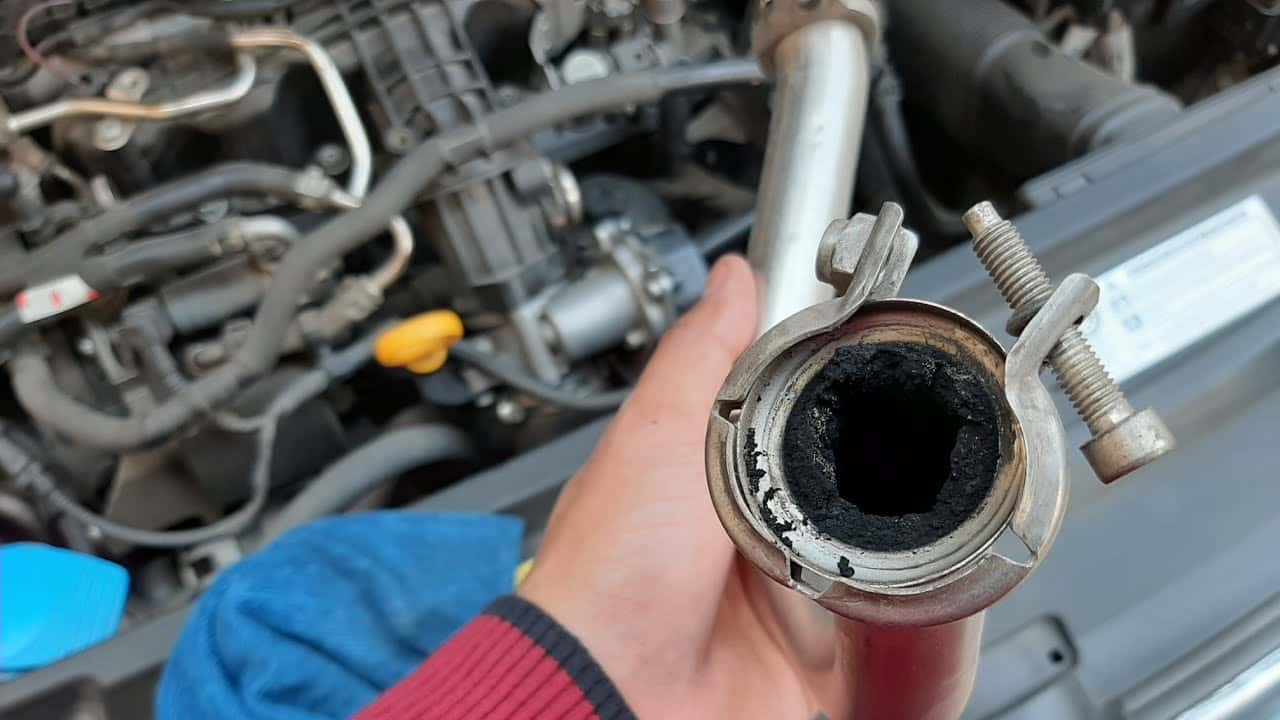
That design choice improves fuel atomization, combustion efficiency, and power output, which is part of why direct injection became standard across much of the industry. But it removes something older engines relied on without anyone really noticing: the constant washing effect fuel spray had on the back of the intake valves as it passed through the intake port. Without that fuel wash, oil vapor from the crankcase ventilation system settles on the valves and, combined with heat, gradually hardens into carbon deposits.
This isn’t a defect specific to Volkswagen’s engineering. It’s a known characteristic of direct injection technology broadly, affecting most manufacturers that have adopted the technology in some form. What varies between manufacturers is how quickly buildup tends to accumulate and how noticeable the performance effects become, both of which depend on driving patterns as much as engine design.
How Carbon Buildup Affects Performance
Intake valves are designed to seal precisely against the cylinder head to control airflow into the combustion chamber. As carbon deposits accumulate on the valve surface and the surrounding intake port, they begin to disrupt that precise airflow, restricting how much air reaches the cylinder and changing the shape of the intake charge as it enters.
The engine’s computer can compensate for some of this restriction, but only to a point. As deposits build further, drivers typically start noticing a rougher idle, since uneven airflow across cylinders can cause inconsistent combustion at low RPM. Hesitation during acceleration often follows, along with a gradual decline in fuel economy as the engine works less efficiently to produce the same power output.
In more advanced cases, carbon buildup can become thick enough to partially obstruct the valve’s ability to seal completely, which affects compression and can contribute to misfires. Reaching this stage typically takes tens of thousands of miles without intervention, but the timeline varies considerably based on driving habits and how much stop-and-go, short-trip driving a vehicle sees.
How Walnut Shell Media Cleaning Works
The cleaning process involves removing the intake manifold to access the cylinder head, then using a specialized tool that blasts crushed walnut shell media at the carbon deposits while a vacuum simultaneously extracts the loosened material. Walnut shell media is used specifically because it’s abrasive enough to remove hardened carbon but soft enough not to damage the valve surface or cylinder head material underneath.
Why this method over chemical cleaning comes down to effectiveness on hardened deposits. Chemical intake cleaners can help with lighter buildup or as a preventive measure, but once carbon has hardened significantly on the valves, walnut shell media blasting removes it more thoroughly than chemical treatment alone typically can.
Technician access and labor make this a more involved service than a standard maintenance item, since the intake manifold has to come off and each valve needs individual attention to ensure thorough cleaning without leaving residual media inside the engine. This labor investment is part of why the service tends to be recommended at specific mileage intervals rather than performed as routine maintenance at every visit.
Driving Habits That Influence Buildup Speed
Frequent short trips where the engine doesn’t reach full operating temperature contribute to faster carbon accumulation, since oil vapor and moisture don’t fully burn off or evaporate the way they would during longer drives that bring the engine to consistent operating temperature.
Extended idling allows crankcase ventilation gases to circulate through the intake system without the benefit of higher airflow that comes with normal driving, which can contribute to buildup over time in vehicles that spend a lot of time idling.
Regular highway driving, by contrast, tends to slow carbon accumulation somewhat, since sustained higher RPM and consistent operating temperature help manage some of the conditions that contribute to deposit formation, though it doesn’t eliminate the issue entirely given the fundamental nature of direct injection.
Signs It May Be Time for Carbon Cleaning
- Rough or uneven idle: Often the earliest noticeable symptom, particularly at a stop light or when the engine is cold.
- Hesitation or reduced responsiveness during acceleration: Can indicate airflow restriction affecting how efficiently the engine responds to throttle input.
- Noticeable drop in fuel economy: Worth tracking over time, since a gradual decline can be easy to attribute to other factors like weather or driving habits.
- Check engine light with misfire-related codes: Should be diagnosed promptly, since this can indicate carbon buildup has progressed to the point of affecting valve sealing.
Recommended Timing for This Service
Carbon cleaning is typically recommended in the 60,000 to 80,000 mile range for EA888-equipped vehicles, though this varies meaningfully based on driving habits. Vehicles with a lot of short-trip, stop-and-go driving may benefit from inspection or service on the earlier end of that range, while vehicles that see more consistent highway driving may go somewhat longer before symptoms develop.
A technician can assess intake valve condition through a borescope inspection, which allows a visual look at valve buildup without fully disassembling the intake system, helping determine whether cleaning is genuinely needed or can reasonably wait.
Protecting Performance Over the Life of Your EA888
Carbon buildup on direct injection engines isn’t a sign that something has gone wrong with a Volkswagen’s engineering. It’s simply a known characteristic of the technology that comes with staying ahead of it through appropriate service timing. Addressing buildup before it significantly affects performance keeps the EA888 running the way it was designed to, with the responsive power delivery and efficiency that make it such a widely used platform in the first place.
For owners who want the reassurance of technicians experienced with EA888-specific carbon cleaning procedures, working with a shop that has the right tools and borescope equipment to assess valve condition accurately makes a meaningful difference. Volkswagen of Clarksburg, located at 730 Lodgeville Rd, Bridgeport, WV 26330, United States, offers carbon cleaning service built around the EA888’s specific needs, giving local drivers a clear way to keep their engine’s performance where it belongs.
0 comment(s) so far on VW EA888 Carbon Cleaning & Direct Injection Performance