


The “Check Engine” Mystery: Decoding VW-Specific Fault Codes for Clarksburg Drivers.
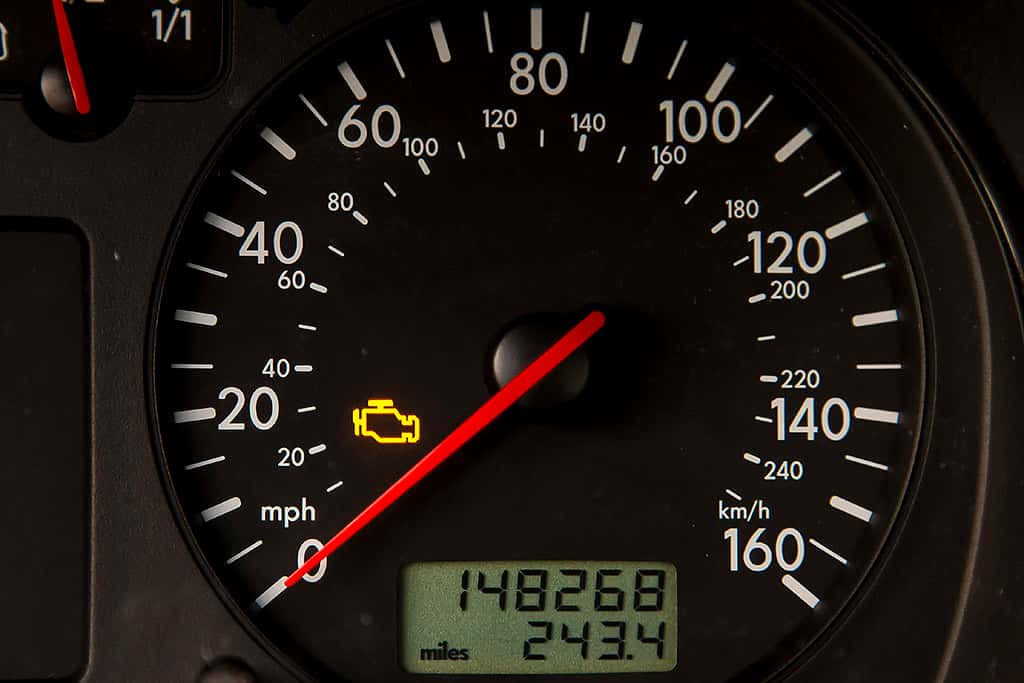
Last April, a 2020 Volkswagen Jetta arrived at our service bay after its owner had spent three months chasing a persistent check engine light through two different general repair shops in the Bridgeport area. Both shops had used standard OBD-II scanners, replaced parts based on the generic codes they pulled, and cleared the light each time. It came back within a week on both occasions. By the time he reached us, he had spent $740 on parts and labor that did not fix the problem. The actual fault, a VW-specific EVAP system pressure sensor failure that only appears in the extended fault code library, was resolved in one visit for $290.
That pattern is one of the most frustrating things we see from Volkswagen owners in the Clarksburg and Bridgeport area. The check engine light comes on, a well-meaning shop pulls the code with a generic scanner, replaces the most common part associated with that code, and the light returns. It is not that those shops are doing poor work. It is that Volkswagen’s diagnostic architecture is genuinely different from what a standard OBD-II tool is designed to read, and the gap between what a generic scanner sees and what is actually happening inside a VW is often where the real problem lives.
Harrison County drivers deal with road conditions that put specific stress on Volkswagen systems, from the elevation changes on US-50 heading toward Clarksburg to the temperature swings that come with West Virginia’s four genuine seasons. Understanding how VW fault codes work, which ones are most common in this area, and why proper diagnosis matters is the fastest way to turn a mysterious dashboard light into a clear, affordable solution.
Why VW Fault Codes Are Different From Other Vehicles
The Two-Layer Diagnostic System
Every vehicle sold in the United States since 1996 is required to support OBD-II diagnostics, a standardized system that allows any scanner to read a basic set of emissions-related fault codes. These are the codes that start with P0 and cover broadly defined system faults that regulators required manufacturers to make universally readable. When a check engine light comes on, a generic scanner at any auto parts store or general shop can pull these codes reliably.
Volkswagen, however, operates a second diagnostic layer that sits entirely outside the OBD-II standard. VW’s proprietary fault code system covers hundreds of additional control modules throughout the vehicle, including the transmission control module, the ABS and stability control systems, the airbag module, the instrument cluster, individual fuel injectors, and the turbocharger management system on models like the Golf GTI and Tiguan. These codes begin with different prefixes and require VW-specific diagnostic software to read accurately.
When a generic scanner tells you the problem is a generic oxygen sensor fault, it may be missing a VW-specific code in the engine management module that points directly to a failing turbo diverter valve or a fuel pressure regulation issue. The generic code is not wrong, but it is incomplete, and incomplete information leads to parts replacements that treat symptoms rather than causes.
What the VW Diagnostic Software Actually Sees
Volkswagen’s factory diagnostic platform, and the professional-grade equivalents used at certified VW dealerships, can communicate with up to 70 individual control modules in a modern Volkswagen. A full system scan on a VW reads every module simultaneously, identifies both active faults and stored intermittent faults that have cleared themselves, and provides freeze frame data showing the exact operating conditions present when the fault occurred.
That freeze frame data is often the difference between a correct diagnosis and an educated guess. Knowing that a misfire fault occurred at 3,200 RPM under full throttle load on a cold engine is a fundamentally different diagnostic starting point than knowing a misfire code exists. The first points directly toward specific causes. The second leads to the parts replacement lottery that frustrates VW owners and drains repair budgets.
The Most Common VW Fault Codes in the Clarksburg Area
Fuel System and EVAP Codes
The Evaporative Emission Control system, which captures fuel vapors and routes them back into the engine rather than releasing them into the atmosphere, is one of the most frequent sources of check engine lights on Volkswagens in West Virginia. The EVAP system uses a network of hoses, valves, and pressure sensors that are sensitive to the temperature swings common in Harrison County, where winter lows can drop below 10 degrees and summer highs push into the low 90s.
VW EVAP faults frequently appear as generic P0440 or P0442 codes on standard scanners, which both suggest a loose or faulty gas cap as the most likely cause. On a Volkswagen, the same symptom is often a failing N80 purge valve, a cracked charcoal canister hose, or a leaking EVAP pressure sensor, all of which are VW-specific components that a generic code description will not name. Replacing a gas cap when the actual fault is an N80 valve is a $4 solution to a $180 problem, and the light will be back within a week.
Ignition and Misfire Codes
Volkswagen’s turbocharged four-cylinder engines, including the EA888 found in the Jetta, Golf, Tiguan, and Passat, are particularly sensitive to ignition system health. Carbon buildup on intake valves, a known characteristic of direct-injection engines, can cause misfires that appear as generic P030X codes on a standard scanner but require VW-specific data to identify which cylinder is affected, under what conditions, and whether the root cause is a failing coil pack, a fouled injector, or carbon accumulation requiring an intake cleaning service.
West Virginia’s stop-and-go driving patterns through downtown Clarksburg and along US-19 toward Fairmont create exactly the low-load, low-RPM driving cycles that accelerate carbon buildup on direct-injection VW engines. Owners who primarily do short trips see this more than highway drivers, and it is one of the most commonly misdiagnosed conditions we encounter.
A 2019 Volkswagen Tiguan owner from Shinnston came to us last winter after two misfire-related repairs at a general shop had not resolved a rough idle and occasional hesitation on US-50. The generic scanner had flagged cylinder 3 as the misfiring cylinder each time, and the shop had replaced the coil pack twice. Our VW-specific diagnostic showed the actual fault was a partially clogged injector on cylinder 3, not the coil. A fuel injector service resolved the issue for $220. The two coil pack replacements that did not fix the problem had cost him $340.
Transmission and DSG Fault Codes
Volkswagen’s Direct Shift Gearbox, the dual-clutch automatic transmission available on several Clarksburg-area VW models, has its own dedicated control module with a fault code library that is completely invisible to standard OBD-II scanners. DSG faults can present as rough shifting, hesitation on takeoff, or unexpected gear changes that owners often describe as the transmission slipping.
Without VW-specific software, a shop reading a DSG-equipped Jetta or Golf will see nothing in the transmission module because the generic scanner cannot communicate with it. The fault codes that explain whether the issue is a mechatronic unit fault, a clutch engagement calibration issue, or a fluid temperature sensor problem exist only in the VW diagnostic layer. DSG service, including fluid replacement at the manufacturer-specified interval, is also one of the most commonly skipped maintenance items on VW automatics in this area, and deferred DSG service is a frequent contributor to transmission fault codes that owners interpret as something more serious than they are.
What chasing a VW fault code with generic tools costs:
- First generic parts replacement based on incomplete code: $150 – $400
- Second attempt after light returns: $150 – $400
- VW-specific diagnostic after two failed repairs: $120 – $150
- Correct repair after proper diagnosis: $180 – $350
- Total with generic approach: $600 – $1,300
What a VW-specific diagnostic costs from the start:
- Full VW system scan with freeze frame data: $120 – $150
- Correct repair on first attempt: $180 – $350
- Smart total: $300 – $500
Your potential savings from starting with the right diagnostic: $300 – $800.
Warning Signs Your VW Needs a Proper Diagnostic Scan
A check engine light is the obvious trigger, but there are several other conditions that warrant a full VW system scan even when no warning light is present.
- Check engine light that returns within two weeks of being cleared. A recurring light after a repair strongly suggests the root cause was not correctly identified the first time.
- Rough idle that varies with engine temperature. Cold idle issues that smooth out as the engine warms often point to VW-specific sensor or injector faults that generic codes will not fully describe.
- Shifting hesitation or firmness changes in DSG-equipped models. Any change in transmission behavior on a dual-clutch VW warrants a full transmission module scan, not just a generic drivetrain check.
- Turbo lag that has increased noticeably over recent months. Gradual turbocharger performance decline in the Tiguan, Jetta GLI, or Golf GTI often appears as VW-specific boost control or diverter valve faults before it triggers a generic code.
- Fuel economy that has dropped without a change in driving habits. Efficiency losses that appear gradually often correspond to VW-specific fueling or ignition faults that are present but not yet severe enough to trigger a generic fault code.
- Multiple warning lights appearing simultaneously. When several systems flag at once, a communication fault in the VW CAN bus network is often the cause, a condition that is entirely invisible to OBD-II scanners but appears immediately in a VW full system scan.
“The biggest misconception I run into is that a check engine light is a check engine light, regardless of what vehicle it’s on,” says Thomas Hargrove, VW Master Diagnostic Technician at the Lodgeville Road location. “On a Volkswagen, we are looking at a completely different diagnostic picture than a standard scanner shows. The customers who come to us first save themselves significant money and frustration. The ones who come to us third are the ones who have already paid for the wrong repairs twice.”
Local Driving Conditions and VW Fault Code Frequency
Harrison County’s geography and climate create a specific set of stressors on Volkswagen systems that show up regularly in our diagnostic work. The elevation changes between Bridgeport and the surrounding communities along US-50 and WV-279 put consistent demand on turbocharger systems, particularly during cold starts in winter when oil viscosity is higher and turbo bearing lubrication takes longer to fully establish. VW-specific turbo-related fault codes are more common in hilly terrain like Harrison County than in flat driving environments, and they frequently do not trigger a generic code until the condition has progressed beyond the early intervention window.
West Virginia’s winters also accelerate sensor degradation across multiple VW systems. The mass airflow sensor, the crankcase ventilation system, and the throttle body are all components that accumulate deposits more quickly in cold, damp conditions and generate VW-specific fault codes that look like oxygen sensor or fuel trim issues on a generic scanner.
Your 30-Day VW Diagnostic Health Check
This week: Note any warning lights, unusual behaviors, or performance changes. Write down exactly when the check engine light appeared, whether it is solid or flashing, and whether you noticed any change in performance, fuel economy, or shifting behavior around the same time. A flashing check engine light indicates an active misfire and should be addressed immediately rather than monitored. A solid light is less urgent but still warrants attention within a few weeks. This documentation takes five minutes and gives your service technician diagnostic context that scan data alone cannot always provide.
Within two weeks: Verify your last diagnostic was performed with VW-specific equipment. If your check engine light has been addressed at a general repair shop in the past six months and has returned, confirm whether the facility used VW-factory diagnostic software or a generic OBD-II scanner. If the answer is generic, a VW-specific scan is the logical next step before any additional parts are replaced. This single question can save you from a third repair attempt on the same fault.
By month’s end: Schedule a full VW system scan at Volkswagen Clarksburg. Even without an active warning light, a full system scan on any VW with more than 40,000 miles will often reveal stored intermittent faults in secondary modules that have not yet triggered a warning but are trending toward failure. Catching these faults in the stored phase rather than the active phase almost always means a less expensive repair and a scheduled appointment rather than an unexpected breakdown on US-50.
These three steps take less than an hour of your time but create a clear, accurate picture of your Volkswagen’s health that generic tools simply cannot provide.
Solving the Mystery the Right Way
The Jetta owner from the opening has not seen his check engine light since that single visit. He brought his wife’s Tiguan in the following month for a full system scan as a precautionary measure, and we found a stored DSG calibration fault that had not yet triggered a warning light. Addressing it before it became an active fault cost $180. He considers that one of the better $180 decisions he has made as a car owner.
A check engine light on a Volkswagen is not a mystery when you have the right tools to read it. It is a specific message from a specific module about a specific condition, and matching the diagnostic equipment to the vehicle is the first and most important step toward resolving it correctly.
When your VW check engine light comes on in the Clarksburg or Bridgeport area, the service team at Volkswagen Clarksburg, located at 730 Lodgeville Rd, Bridgeport, WV 26330, is equipped with VW-factory diagnostic software to read the complete fault picture on the first visit. Scheduling is available online or through the service department. Accurate diagnosis from the start is the fastest, most affordable path from a dashboard light to a resolved repair. 🔍
0 comment(s) so far on The “Check Engine” Mystery: Decoding VW-Specific Fault Codes for Clarksburg Drivers.