


The Brake Check Challenge: Why Clarksburg’s Hills Mean You Need More Frequent Brake Inspections
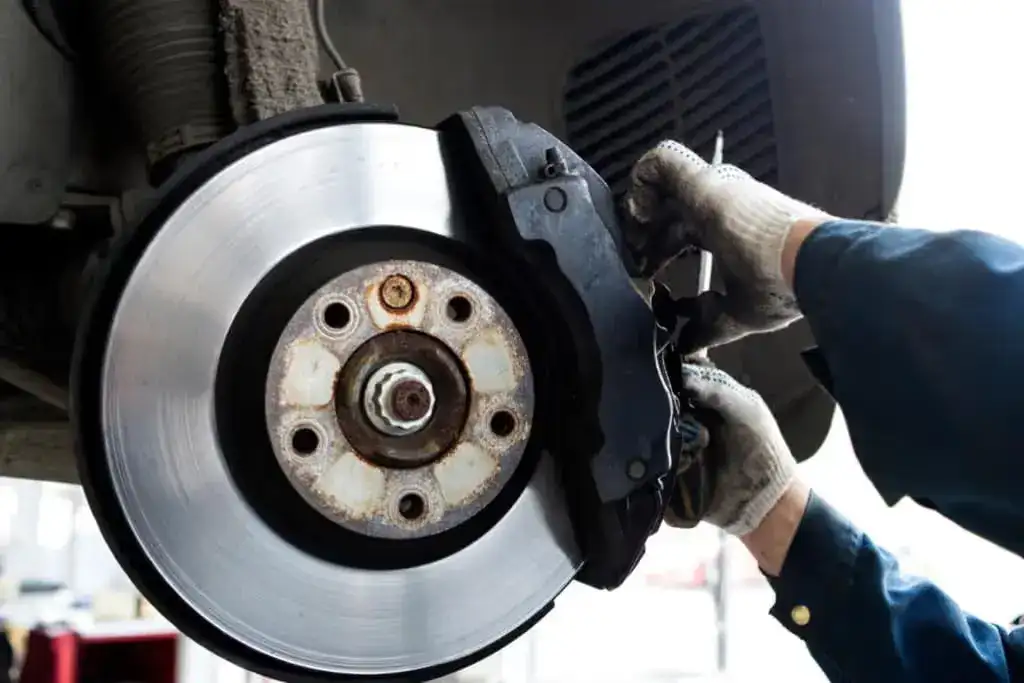
A Volkswagen Passat owner came into our service bay last month after noticing a grinding noise during braking on the descent from the US-19 and I-79 interchange toward downtown Clarksburg. He had been told at his last oil change six months earlier that his brakes had plenty of life remaining. He had driven 8,000 miles since that inspection, almost entirely on Harrison County’s hilly surface streets and the I-79 corridor, and assumed the previous inspection’s finding still applied. The rotors on both front corners had been scored beyond resurfacing from metal-on-metal contact that had been developing for an estimated 1,500 to 2,000 miles. Full front brake restoration including rotors, pads, and caliper service cost $890. A mid-interval brake inspection six months after the oil change inspection would have caught the pad wear before rotor contact for $65.
Harrison County’s terrain does something to brake systems that flat-road drivers never experience in the same way. The descent from the US-19 ridge south of Clarksburg toward the valley floor, the grade on I-79 between the Bridgeport interchange and the Meadowbrook Road exit, and the surface streets through downtown Clarksburg that drop and climb through every errand and commute put sustained thermal and mechanical load on brake components that the service intervals designed for average national driving conditions simply don’t account for. A brake inspection finding of adequate pad thickness in Columbus or Pittsburgh carries a different timeline to the next inspection than the same finding in Bridgeport. The hills between those measurements change everything.
At Volkswagen Clarksburg, our service team performs brake inspections on every vehicle that comes through our service bay, and the pattern we see in Harrison County vehicles compared to what the manufacturer’s standard inspection intervals would predict is consistent and significant. Drivers who commute on I-79, run errands on US-19, and navigate the grade changes on Lodgeville Road and US-50 wear their brake components faster than the flat-road assumptions behind standard service intervals anticipate. Understanding why, knowing what the warning signs look like, and establishing a more frequent inspection rhythm for this specific driving environment is the information that prevents the outcome the Passat owner experienced.
Why Hills Accelerate Brake Wear Differently Than Miles Alone
Brake wear is conventionally measured against mileage because mileage is the most accessible proxy for how much the brakes have been used. The problem with mileage as the sole metric in Harrison County’s driving environment is that the thermal and mechanical load on brake components per mile of driving in Clarksburg and Bridgeport is fundamentally higher than the same calculation in a flat-road commuting environment, and the service intervals derived from average driving data don’t reflect that difference.
When a vehicle descends a grade like the US-19 approach into Clarksburg from the south or the I-79 southbound descent toward the Flatwoods area, the brakes are asked to convert kinetic energy plus gravitational potential energy into heat rather than kinetic energy alone. A flat-road braking event from 60 mph to a stop converts one fixed amount of energy. The same speed reduction on a sustained grade converts that energy plus the additional energy that gravity is continuously adding as the vehicle descends. The brake pads and rotors absorb more energy per braking event on a hill than on flat ground, which produces more heat per event and more friction material wear per event.
The cumulative effect over the daily commuting patterns of a Harrison County driver is meaningful. A Bridgeport resident who commutes to Clarksburg on US-19, runs errands on the downtown surface streets, and returns home via I-79 is putting more thermal cycles on their brake system per day than a driver covering the same mileage on flat roads. Those thermal cycles accumulate faster than the mileage counter advances, which is why a brake inspection finding at one oil change can produce a different picture at the next oil change in this environment than the interval between those two points would suggest in a national average context.
What Clarksburg’s Specific Road Network Demands 🏔️
Not all hills are equal in what they ask of a brake system, and the specific road network that Bridgeport and Clarksburg area drivers use regularly creates a distinctive pattern of brake stress that is worth understanding in specific terms.
The I-79 corridor between the Bridgeport interchange and the Meadowbrook Road exit involves grade changes in both directions that require active braking rather than simple speed maintenance. Southbound traffic approaching the interchange from Morgantown descends through a sustained grade section that asks the brakes to manage speed continuously rather than in a single deceleration event. Northbound traffic climbing toward the Morgantown exits creates the return conditions for the same drivers, and the cumulative daily load of both directions on brake components adds up across a work week in a way that a mileage-only inspection interval doesn’t capture.
US-19 south of Clarksburg toward Weston and the grades on US-50 heading west toward Parkersburg create similar sustained-load conditions for drivers who use those routes regularly. The surface streets in downtown Clarksburg, where the terrain drops toward the valley floor and back up through the commercial district, add frequent moderate braking events to the pattern that the highway grades create. Even errands that feel routine to Clarksburg residents represent a brake-loading pattern that would be unusual in a flat-road driving environment.
The combination of sustained highway grade loads and frequent surface street braking events is specifically what makes Harrison County driving harder on brake systems than the mileage numbers alone suggest, and it is what makes the case for more frequent brake inspections in this market than the national average service schedule assumes.
What Brake Inspection and Service Costs vs. What Deferred Inspection Costs 💰
The cost comparison between regular brake inspections and the consequences of inspection gaps in a hilly driving environment is one of the clearest in automotive maintenance:
Proactive brake inspection and service at appropriate intervals:
- Standalone brake inspection: $45 to $75
- Front brake pad replacement (caught at 3 to 4mm): $180 to $280
- Rear brake pad replacement (caught at 3 to 4mm): $160 to $240
- Brake fluid flush (every two years on WV grades): $110 to $160
Proactive brake maintenance over 40,000 miles of Harrison County driving: $700 to $1,000 total
Consequences of deferred inspection in hilly terrain:
- Front rotor replacement from scored surfaces: $280 to $480 per axle additional
- Rear rotor replacement from worn-past-minimum pads: $240 to $420 per axle additional
- Caliper replacement from heat-seized unit: $350 to $700 per corner
- Complete brake restoration after extended wear neglect: $900 to $1,800
The $65 mid-interval brake inspection that would have caught the Passat owner’s pad wear before rotor contact is the number that defines this calculation. Sixty-five dollars against $890 in rotor and brake restoration costs is not an unusual ratio in a hilly driving environment where pad wear between inspection intervals is genuinely less predictable than flat-road intervals suggest.
A Downtown Clarksburg Commuter Who Caught It in Time
A Volkswagen Jetta owner from Clarksburg came in last fall for an oil change and specifically asked for a brake inspection after noticing a faint squeal when stopping on the downtown surface streets near US-19. She had just over 7,000 miles since her previous brake inspection and had been told at that point her pads had 5mm remaining. When our technician measured at the current visit, her front pads had worn to 2.5mm, a loss of 2.5mm in 7,000 miles on a driving pattern that included daily downtown Clarksburg errands and regular I-79 commuting. We replaced the front pads for $210 before any rotor damage had occurred. Her previous inspection seven months earlier had suggested more time remained than Clarksburg’s terrain actually allowed. The squeal she noticed was the wear indicator making contact exactly as intended, and she responded to it correctly.
Warning Signs Your Brakes Need Inspection Now ⚠️
In a hilly driving environment, the standard warning sign timeline compresses. These indicators in a Harrison County driving context demand a same-week inspection rather than a wait-and-see approach:
Squealing during normal stops on familiar grades: The wear indicator squeal that signals pad replacement is due can appear more quickly than expected between inspections in a hill-heavy driving pattern. A squeal that is consistent rather than weather-related on the US-19 descent or the I-79 approach to Bridgeport means the wear indicator has contacted the rotor and pad replacement is overdue rather than upcoming.
Grinding or scraping sound during braking: Metal-on-metal contact between the pad backing plate and the rotor is already occurring when grinding appears. On Harrison County’s grades where every braking event adds rotor scoring, driving past this symptom accelerates the damage rapidly. This is a same-week service situation at minimum.
Pedal that travels further than normal before resistance builds: Increased pedal travel can indicate worn pads, air in the brake lines from degraded fluid, or a caliper that is not returning fully between applications. All three causes are more consequential on grades than on flat roads and all three warrant diagnosis before the next significant hill descent.
Pulling to one side during braking on a straight descent: Uneven pad wear or a sticky caliper that produces a pull on a flat road becomes more dramatic on a grade where the braking force is higher and the vehicle’s weight is loading the downhill side differently. A pull on the I-79 descent toward Bridgeport or the US-19 grade through Clarksburg indicates an asymmetric brake condition that needs correction.
Burning smell after a downhill drive: Heat from sustained braking on grades like the US-50 approach to Parkersburg or the I-79 descent produces a chemical smell when pads or fluid are approaching their thermal limit. This is an early warning that the brake system is being pushed close to its capacity on this specific terrain.
Vibration through the pedal or steering wheel during braking: Rotor warping from repeated thermal cycling on WV grades produces a pulsing sensation that is most noticeable at the moderate braking forces used on familiar descents. Warped rotors on a hilly route like US-19 are using irregular contact geometry on every stop, which accelerates both rotor and pad wear beyond what the mileage interval would suggest.
More than six months since the last brake inspection with hill-heavy driving: In a driving environment like Harrison County’s, waiting 12 months between brake inspections when the driving pattern involves daily grade work is the interval that produces the outcomes the Passat owner experienced. Six-month or 5,000-mile mid-interval checks in this specific environment are not overcautious. They are appropriate.
What Our Service Team Says
“The mistake I see most often with Harrison County drivers is carrying over a brake inspection result from one season to the next without accounting for what the hills between those two points actually did to the pads. A 5mm reading in spring doesn’t mean 5mm in fall when someone has been driving I-79 and US-19 every day through the summer. The wear rate on grades is genuinely different from flat-road wear, and the inspection interval needs to reflect the terrain rather than the calendar or the odometer alone. Six months or 5,000 miles in this market. That’s the interval that catches wear before it becomes damage.” — Derek Haines, Senior Service Technician, Volkswagen Clarksburg
When a Mid-Interval Check Prevented a Serious Repair
Sandra drives her Volkswagen Tiguan between her home near Bridgeport and a worksite south of Clarksburg on US-19 daily, a commute that covers the grade sections of US-19 twice per day in both directions. She came in at the six-month mark after her oil change inspection specifically because she had been advised by our service team that her commute pattern warranted a mid-interval brake check. Her oil change inspection six months earlier had shown front pads at 4mm and rear pads at 5mm, both considered acceptable at that point. The six-month check found her front pads at 1.5mm, a decline of 2.5mm in six months of US-19 commuting. Rear pads had dropped to 3mm in the same period. We replaced both front and rear pads for $380 before any rotor contact had occurred. The rotor replacement that would have followed an additional two to three months of driving on those pads would have added $480 to that bill. The mid-interval check cost $65 and identified the service at the right time.
Your 30-Day Brake Health Plan
This week, take a moment to think specifically about your daily driving pattern and how many grade sections you navigate per week. If your commute involves I-79 between Bridgeport and Morgantown or Clarksburg, daily surface streets in downtown Clarksburg, regular US-19 or US-50 driving, or any combination of these, you are in the driving profile that warrants more frequent brake inspection than a national-average service schedule assumes. That honest assessment of your terrain profile is the first step in establishing the inspection rhythm that your specific driving demands.
Within two weeks, check your service records for the last brake inspection date and the pad thickness measurements recorded at that visit. If the inspection was more than six months ago and your driving since has included meaningful grade work on Harrison County’s roads, a mid-interval check is appropriate regardless of whether any symptom has appeared. Pad wear on WV grades between inspection points is less predictable than the previous inspection’s finding suggests, and knowing the current thickness gives you the information to make the correct timing decision for the next service.
By month’s end, schedule a brake inspection at Volkswagen Clarksburg if your records show a gap of more than six months or if any of the warning signs described above have appeared during your I-79 or US-19 commute. Ask our technician to record the specific pad thickness measurements at all four corners so that the rate of wear between this inspection and the next one is calculable rather than estimated. Those specific numbers, compared against your driving pattern and the terrain you cover, give our team the data to tell you when your next inspection should be rather than applying a generic interval that wasn’t designed for Harrison County’s hills.
Schedule Your Brake Inspection at Volkswagen Clarksburg
The Passat owner whose scored rotors cost $890 came back for a brake inspection six months after that repair, on schedule, with the specific understanding that his I-79 and US-19 driving pattern demanded a mid-interval check rather than a full-year wait. His pad thickness at that six-month inspection showed front pads at 3mm, exactly the finding that warrants near-term scheduling rather than immediate replacement, and exactly the finding that would have prevented his rotor damage if a mid-interval check had been part of his service rhythm from the beginning. He now has that rhythm established and understands why the hills between his inspection appointments change the timeline that a flat-road measurement would suggest.
Our team at Volkswagen Clarksburg is positioned on the I-79 corridor that connects Bridgeport to the grade sections that define Harrison County driving, and we see the brake wear patterns that terrain produces more clearly than any service interval chart can capture. We know what US-19 and I-79 do to brake systems between inspection points, and we have the measurement data from Harrison County vehicles to back that knowledge with specific numbers.
Visit us at Volkswagen Clarksburg, 730 Lodgeville Rd, Bridgeport, WV 26330. Our service department is open Monday through Saturday. Schedule your brake inspection online through our website or speak with one of our service advisors directly. We serve drivers from Bridgeport, Clarksburg, Shinnston, Weston, Fairmont, and throughout North Central West Virginia. Clarksburg’s hills are not going to flatten out. Make sure your brake inspection schedule reflects the terrain you actually drive. 🛑
0 comment(s) so far on The Brake Check Challenge: Why Clarksburg’s Hills Mean You Need More Frequent Brake Inspections