


The 2026 Tiguan Refresh: Everything you need to know about servicing the new 268-hp SEL R-Line Turbo in the WV hills
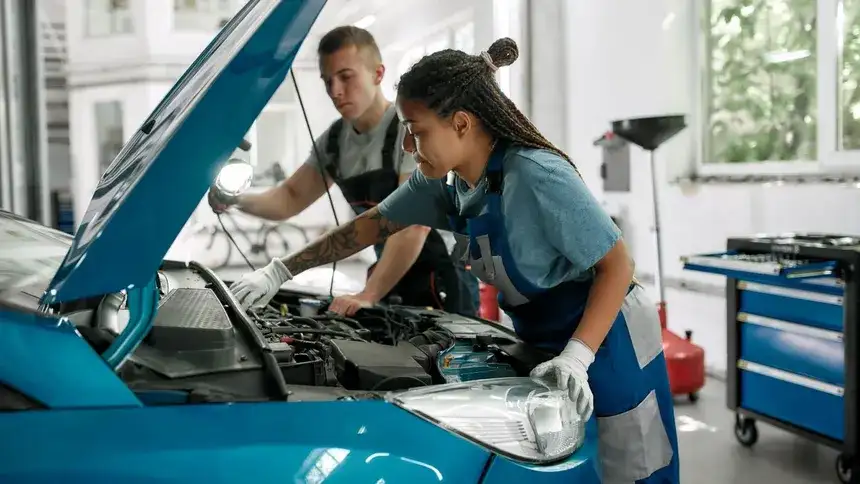
Last month, a 2025 Tiguan SEL came in from Fairmont after its owner had been running the vehicle on extended oil intervals, pushing past the 10,000-mile VW-recommended service window by nearly 4,000 miles on the assumption that modern synthetic oil could handle the stretch. He commuted daily on I-79 between Fairmont and Bridgeport, a route with significant elevation change and sustained turbo loading on every southbound climb. When our technician drained the oil, it had darkened and thickened beyond its designed viscosity range, and the turbocharger showed early signs of oil coking on the bearing surfaces from degraded lubrication. The oil service at the correct 10,000-mile interval? $95. The oil service plus turbocharger bearing inspection and cleaning required after the extended interval on a mountain commute? $680.
That $585 gap between a correctly timed service and a corrective one is going to matter more on the 2026 Tiguan SEL R-Line than it did on its predecessor, and the reason is straightforward: more power from the same basic architecture means more heat, more turbo shaft speed, and more demand on every fluid and component in the system. The 268-hp upgrade isn’t just a performance number. It’s a maintenance context that every Clarksburg and Bridgeport Tiguan owner needs to understand before the first service interval arrives.
Harrison County is genuinely one of the more demanding environments for a turbocharged SUV in the Mid-Atlantic region. The grades on I-79, the elevation changes on US-50, and the mountain two-lanes throughout the surrounding communities don’t just make the Tiguan’s turbo work harder. They keep it working harder for longer sustained periods than flat-terrain driving produces. The 2026 SEL R-Line’s upgraded powertrain was engineered to handle that demand. Servicing it correctly is how that engineering gets preserved through years of WV ownership.
This guide covers everything Clarksburg and Bridgeport Tiguan owners need to know about the 2026 refresh, what the 268-hp turbo specifically requires from a service perspective, and how West Virginia’s mountain driving conditions affect the maintenance calendar from day one.
What’s New in the 2026 Tiguan SEL R-Line
The 2026 Tiguan refresh represents Volkswagen’s most significant powertrain update to the Tiguan platform in several years. The headline change is the upgraded 2.0-liter TSI turbocharged engine producing 268 horsepower and 295 lb-ft of torque in the SEL R-Line configuration, up from the previous generation’s 184 horsepower. That 84-horsepower increase comes from a revised turbocharger with a larger compressor wheel, an upgraded intercooler system, revised fuel injection mapping, and a strengthened bottom end that supports the higher cylinder pressures the additional boost produces.
The transmission pairing is an updated 7-speed DSG dual-clutch unit recalibrated for the higher torque output, with revised shift programming that takes advantage of the broader power band the new turbo delivers. The 4MOTION AWD system receives updates to its torque distribution logic, with faster rear axle engagement response that makes the system’s intervention in low-traction situations more proactive than the previous generation’s approach.
From the driver’s seat on WV-20 or the grade climb on I-79 south of Morgantown, the difference between the 2025 and 2026 Tiguan is immediately obvious. The SEL R-Line pulls through elevation change with a confidence the previous engine couldn’t match, and the DSG’s revised programming delivers that power with shift quality that feels genuinely performance-oriented rather than simply adequate.
What the Power Upgrade Means for Service Requirements
The service requirements for the 2026 SEL R-Line are not dramatically different from those of the previous Tiguan generation, but they are specifically calibrated for the higher-output application in ways that matter for WV owners. Understanding the differences before they become cost surprises is the practical value of reading this section carefully.
The upgraded turbocharger operates at higher shaft speeds and higher thermal loads than the previous unit. VW’s specification for full synthetic oil meeting the 502.00 or 504.00 standard remains in place, but the 10,000-mile oil change interval is the ceiling rather than a target to stretch beyond in West Virginia driving conditions. The mountain driving profile that defines most Harrison County commutes means the turbo bearing surfaces are operating at elevated temperatures for extended periods on every drive, and oil that has been in service for 12,000 or 14,000 miles on a flat-terrain schedule has degraded beyond its protective capacity for a mountain-driving TSI application.
The DSG in the 2026 SEL R-Line receives higher torque inputs than the previous generation’s DSG was designed around, and the 40,000-mile DSG fluid service interval is correspondingly important. On the revised transmission calibration, degraded DSG fluid doesn’t just affect shift quality gradually. It affects the mechatronic unit’s ability to manage the higher engagement forces the new torque output produces, which means the consequences of a missed DSG service are more immediately felt on the 2026 than on the 2025 model. 🔧
How West Virginia Mountain Driving Affects the 268-HP Turbo
The physics of mountain driving and turbocharged engines interact in ways that are worth understanding specifically for Harrison County and Monongalia County Tiguan owners, because the driving conditions on I-79, US-50, and the secondary roads throughout the region represent a sustained stress profile that flat-terrain owners of the same vehicle simply don’t experience.
Turbochargers work by using exhaust gas energy to spin a compressor that forces more air into the engine. The compressor wheel on the 2026 SEL R-Line’s upgraded turbo spins at speeds that can exceed 200,000 RPM under boost. At those speeds, the bearing surfaces depend entirely on a continuous, clean film of oil for lubrication and heat transfer. The thermal load on those bearings is highest during sustained high-load driving, exactly the condition that a grade climb on I-79 between Bridgeport and Morgantown or a sustained pull on US-250 through the Tygart Valley produces.
After a sustained high-load climb, the turbocharger bearing surfaces retain significant heat even after the engine returns to idle or shuts down. This is the origin of the practice called heat soaking, where the turbo continues spinning at reduced speed after a hard drive with no oil circulation once the engine stops. Modern Tiguan engines address this through improved oil passages and thermal management, but the fundamental physics of turbocharger heat retention means that driving habits matter for long-term turbo health in ways that flat-terrain driving makes less critical.
The Idle-Down Habit That Protects WV Turbo Engines
For Bridgeport and Clarksburg Tiguan owners who regularly complete hard climbs on I-79 or aggressive pulls on US-50, a brief idle period of one to two minutes before shutting the engine down after a demanding drive allows the oil circulation to continue cooling the turbocharger bearing surfaces before they lose their lubrication supply. This is not a mandated requirement from VW, but it is a driving habit that consistently extends turbocharger service life in high-demand mountain applications.
The modern Tiguan’s engine management system helps manage this through its own post-shutdown cooling protocols, but a driver who completes a sustained I-79 grade climb and immediately shuts the engine down in a Bridgeport parking lot is working against those protocols rather than supporting them. One to two minutes at idle after a demanding drive costs nothing and meaningfully reduces the thermal stress that the turbocharger experiences at the moment it loses oil pressure.
An RS-Line Tiguan owner from Clarksburg came in last fall describing a faint whine from the engine bay that had developed over the summer. He had been commuting aggressively on I-79, parking immediately after reaching his destination without any idle-down period. Inspection found early turbocharger bearing wear consistent with repeated hot-shutdown events. Caught before the bearing wear progressed to shaft imbalance: a turbocharger inspection and oil system service at $480. Left through another season of the same habit: turbocharger replacement on a high-output TSI application running $2,200 to $2,800.
The Complete Service Calendar for the 2026 SEL R-Line in WV
Building a clear first-year service calendar for the 2026 Tiguan SEL R-Line removes the guesswork and establishes the maintenance foundation that the upgraded powertrain’s performance depends on across years of West Virginia ownership.
Oil Service: The Non-Negotiable Foundation
VW-specification 502.00 or 504.00 full synthetic oil at the 10,000-mile interval is the baseline that every other service interval is built on for the 2026 SEL R-Line. In Harrison County driving conditions, treat the 10,000-mile interval as the ceiling. Owners who complete primarily short-trip Bridgeport and Clarksburg driving with multiple cold starts per day should consider a 7,500-mile interval, because short-trip driving with incomplete thermal cycling degrades oil through moisture and combustion byproduct accumulation faster than the mileage counter reflects.
The cost of VW-specification synthetic oil service at our Lodgeville Road location runs $95 to $120 for the 2026 SEL R-Line. It is the single service item with the most direct relationship to turbocharger longevity, and no other maintenance investment delivers a higher return on the upgraded powertrain’s long-term health than staying precisely on this interval.
DSG Service: The 40,000-Mile Priority
The 7-speed DSG in the 2026 SEL R-Line requires fluid and filter service at 40,000 miles, with an adaptive reset that recalibrates the mechatronic unit’s engagement parameters to the fresh fluid’s friction characteristics. On the higher-torque application of the 268-hp engine, this service is more consequential than it was on the previous generation’s lower-output calibration.
West Virginia mountain driving adds thermal stress to the DSG fluid through the repeated torque converter lockup and unlock cycles that grade driving produces. A DSG fluid that has been through a full Harrison County mountain driving year carries more thermal degradation than the same mileage on flat terrain would produce, which is why the 40,000-mile interval is the target rather than a threshold to approach casually. DSG service at our Lodgeville Road location runs $280 to $340 and includes the adaptive reset that ensures the recalibrated transmission engagement matches the new fluid’s characteristics.
Cooling System and Intercooler Attention
The 2026 SEL R-Line’s upgraded intercooler is a larger-capacity unit than the previous generation, designed to handle the higher charge air temperatures the upgraded turbo produces. The intercooler’s function is to cool the compressed, heated air between the turbocharger outlet and the engine intake, improving combustion density and reducing the thermal stress on combustion chamber components.
In West Virginia summer driving, where ambient temperatures on I-79 approach 90 degrees through July and August and the sustained grade climbing that Harrison County roads require keeps charge air temperatures elevated, the intercooler is working at or near its thermal capacity. Keeping the intercooler inlet clear of the road film and insect accumulation that builds up on WV highway driving is a simple maintenance habit that preserves heat transfer efficiency through the hottest driving conditions of the year.
The engine cooling system on the 2026 SEL R-Line uses Volkswagen’s current G13 coolant specification, and the coolant condition check at each oil service ensures the system’s corrosion protection and heat transfer capacity are maintained. A cooling system that has degraded coolant concentration is more vulnerable to the thermal load that sustained mountain driving places on the radiator and associated components.
Warning Signs the 268-HP Turbo Needs Attention
These symptoms on the 2026 SEL R-Line warrant a prompt diagnostic appointment at our Lodgeville Road location rather than a wait-and-see approach, because the upgraded powertrain’s higher operating temperatures mean degradation moves from early-stage to expensive faster than it does on lower-output TSI applications.
A high-pitched whine or whistle from the engine bay under boost that wasn’t present when the vehicle was new indicates turbocharger bearing wear or a boost leak in the intercooler or charge pipe system. Either finding addressed early costs a fraction of what it costs after continued operation has extended the damage.
A noticeable reduction in boost response on familiar grade climbs on I-79 or US-50, where the SEL R-Line previously pulled confidently but now feels hesitant under similar throttle inputs, points to a boost pressure concern, a worn wastegate, or a turbocharger efficiency reduction that warrants prompt diagnosis.
Blue or gray smoke from the exhaust on startup that clears after a minute of running indicates oil is entering the combustion chamber through turbocharger seals, a finding that is manageable and inexpensive when addressed at first appearance and significantly more costly after continued operation.
DSG shudder or hesitation on light acceleration from a Bridgeport stoplight, particularly on cold morning starts, indicates DSG fluid that has degraded past its design parameters for the 268-hp torque input the transmission is managing. This symptom combined with the higher torque output of the 2026 engine means the adaptive reset and fluid service should happen promptly rather than at the next scheduled interval. 🔧
Oil consumption between changes that exceeds one quart per 5,000 miles on a new 2026 SEL R-Line warrants a diagnostic visit rather than simply topping up. Some consumption is normal on high-performance TSI applications, but consumption beyond this threshold on a new vehicle warrants documentation and professional evaluation under the vehicle’s warranty coverage.
Cost Comparison: Proactive SEL R-Line Service vs. Reactive Repair
Proactive service approach through 40,000 miles of WV mountain driving:
- Four oil services at $110 each: $440
- One DSG fluid service and adaptive reset at 40,000 miles: $320
- One cooling system check and coolant service: $140
- One alignment check after first year of WV road exposure: $180
- Smart proactive total through 40,000 miles: $1,080
Reactive approach after deferred service intervals:
- Turbocharger bearing inspection and cleaning after extended oil intervals: $480 to $680
- DSG mechatronic service after shudder develops from degraded fluid: $520 to $740
- Turbocharger replacement if bearing wear progresses to shaft damage: $2,200 to $2,800
- Total reactive cost range: $3,200 to $4,220
Your savings from proactive service through 40,000 miles: $2,120 to $3,140. Those figures reflect the actual cost differential our service team at the Lodgeville Road location has documented between correctly maintained high-output TSI applications and those that arrive with deferred intervals and developing turbo or DSG concerns.
“The 268-hp upgrade on the 2026 SEL R-Line is genuinely exciting for WV driving, and I mean that without any reservation,” says Michael Garrett, Master VW Technician at the Lodgeville Road location. “What I want every new SEL R-Line owner to understand is that the service intervals on this engine are not suggestions. They’re the boundaries within which that performance is sustainable long-term. On I-79 grades, this turbo is working hard. Give it clean oil on time, keep the DSG fluid current, and this powertrain will reward you for a very long time. Push the intervals on WV mountain roads and you’ll find the limits faster than you expect.”
Your 30-Day New SEL R-Line Owner Plan
This week: Document your delivery mileage and set calendar reminders for your first three service intervals: 7,500 miles for your first oil service if your driving profile is primarily short-trip Bridgeport and Clarksburg commuting, 10,000 miles if your profile includes regular highway segments on I-79, and 40,000 miles for your DSG service. Setting these reminders now, before the ownership schedule fills with other priorities, is the single most effective thing you can do to protect the 268-hp powertrain investment in the first month of ownership.
Within two weeks: Establish the idle-down habit described earlier in this guide as a standard part of your driving routine on demanding WV routes. On any drive that involved sustained grade climbing on I-79 or aggressive use of the turbo on US-50 or the mountain roads surrounding Bridgeport and Clarksburg, allow one to two minutes of low-load idling before shutdown. This habit costs nothing, requires no parts, and directly protects the turbocharger bearing surfaces that represent the most sensitive component in the upgraded powertrain.
By month’s end: Schedule your first familiarization service visit at the Lodgeville Road location even if your mileage hasn’t reached the first oil interval. Our VW-certified technicians will document your baseline vehicle condition, confirm the correct oil specification and interval for your specific driving profile, walk you through the DSG and cooling system service timeline for the 2026 SEL R-Line calibration, and answer any questions about the upgraded powertrain’s specific requirements. Establishing that relationship early means every subsequent service conversation starts from a documented baseline rather than a cold start. 🔧
These three steps take less than 30 minutes of your actual time and establish the ownership foundation that protects the 2026 Tiguan SEL R-Line’s most significant engineering upgrade through every mile of West Virginia driving ahead.
The 2026 Tiguan SEL R-Line is the most capable version of this platform Volkswagen has brought to the Clarksburg and Bridgeport market, and West Virginia’s roads are exactly the environment where 268 horsepower and proper AWD calibration make a genuine difference. Protecting that capability through the correct service intervals is not a complicated commitment. It’s a straightforward investment in the performance that made the vehicle worth choosing.
Schedule Your 2026 SEL R-Line Service Today
The Fairmont Tiguan owner from the opening had his turbocharger cleaning completed, his oil changed with the correct VW specification, and his service calendar reset with proper interval reminders at our Lodgeville Road location. He left understanding specifically why the 10,000-mile ceiling matters on a mountain commute, and he hasn’t stretched an interval since. His turbocharger shows no further signs of the coking that began during his extended interval period, and his SEL R-Line pulls through the I-79 grades with every bit of the performance the upgrade was built to deliver.
At Volkswagen Clarksburg, our VW-certified technicians service the 2026 Tiguan SEL R-Line with the model-specific knowledge, correct fluid specifications, and DSG service capability that the upgraded 268-hp powertrain requires. Whether you took delivery last month and want to establish your service baseline, are approaching your first oil interval, or have a concern about turbo or DSG behavior that developed during WV driving, we’ll give you an honest assessment and a clear service plan built around what the SEL R-Line specifically demands.
Schedule your 2026 Tiguan SEL R-Line service today by contacting our service department or booking online. You’ll find us at 730 Lodgeville Rd, Bridgeport, WV 26330.
Proper service on the 268-hp SEL R-Line protects the engineering upgrade that defines this generation of the Tiguan, preserves the mountain performance that West Virginia roads are built to reward, and ensures every grade climb on I-79 and every WV back road ahead is backed by a powertrain that’s been given exactly what it needs to perform at its best. That is what correct service on a performance-upgraded VW delivers.
0 comment(s) so far on The 2026 Tiguan Refresh: Everything you need to know about servicing the new 268-hp SEL R-Line Turbo in the WV hills