


Tackling the WV Hills: Why Brake Fluid Boiling Points Matter
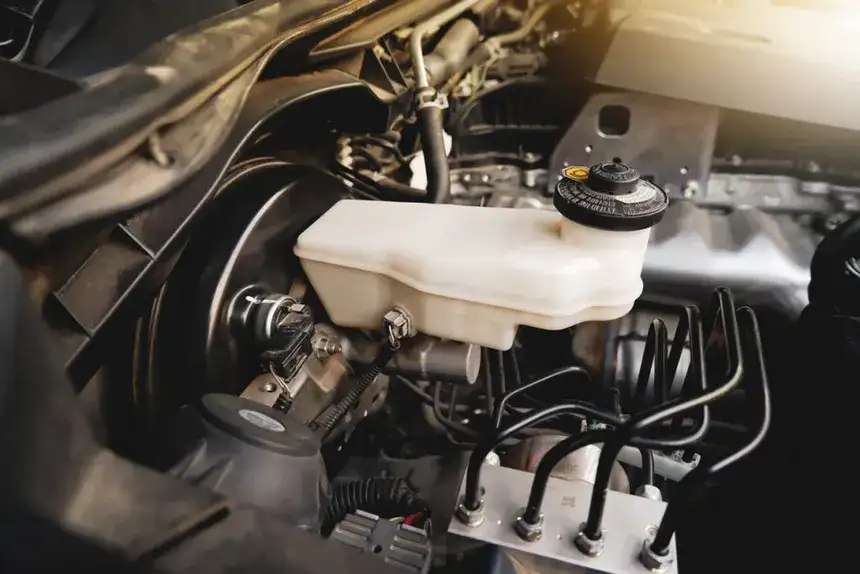
Marcus thought he was saving money by skipping his brake fluid service. He was driving back from a weekend trip down US-50 outside of Bridgeport, pressing the pedal harder and harder as the grade steepened near the Elk Run interchange, when the pedal went soft and spongy under his foot. What followed was a terrifying few seconds of pumping the brakes before they finally caught. The culprit was degraded brake fluid that had absorbed enough moisture to lower its boiling point well below what West Virginia’s long descents demand. A $120 brake fluid flush could have prevented a situation that ultimately cost Marcus over $1,800 in rotor replacements, caliper repairs, and a tow from the side of Route 50.
West Virginia roads are not like anywhere else. Between the rolling grades along US-19, the long descents off I-79 near Bridgeport, and the winding county routes that snake through Harrison County, your brakes are doing work that flat-state drivers simply never experience. That constant load generates heat, and heat is brake fluid’s worst enemy. At Volkswagen Clarksburg, our service team sees brake-related issues every season that trace back to one overlooked maintenance item: the brake fluid itself.
What Brake Fluid Actually Does Under Pressure
Brake fluid is a hydraulic fluid. When you press your pedal, it transmits that force through the brake lines to the calipers, which squeeze the pads against the rotors and bring your Volkswagen to a stop. The entire system depends on the fluid staying liquid and incompressible. When brake fluid overheats, it can vaporize, and vapor is compressible in a way that liquid is not. The result is a brake pedal that sinks toward the floor without producing proportional stopping force, a condition technicians call brake fade.
The temperature at which brake fluid transitions from liquid to vapor is its boiling point, and that number drops over time. Fresh DOT 4 fluid, which is standard in most modern Volkswagen vehicles, has a dry boiling point around 446 degrees Fahrenheit. Once it has absorbed just 3 percent water content through normal moisture infiltration, that wet boiling point falls to around 311 degrees. Long descents like the grade on US-19 south of Clarksburg can push brake temperatures into ranges that threaten degraded fluid.
Why West Virginia Hills Are Uniquely Hard on Your Braking System 🏔️
Most brake system testing and service interval recommendations are based on relatively flat driving conditions. West Virginia driving routinely exceeds those assumptions. A sustained descent on I-79 between the Meadowbrook Road exit and downtown Clarksburg requires continuous brake modulation for a distance that generates heat faster than rotors and calipers can shed it. The same is true for Route 20 heading south into Weston and the grades along US-33 east toward Elkins.
This is why many drivers in the region notice pedal changes on downhill runs that they never experience on flat roads. The brake fluid may be perfectly adequate for normal city driving around Bridgeport and Clarksburg, but inadequate the moment the terrain demands extended stopping power. Recognizing that distinction is one of the most important things a Harrison County driver can do for their safety.
What a Brake Fluid Flush Costs vs. What Neglect Costs 💰
A brake fluid flush at Volkswagen Clarksburg typically runs between $90 and $150 depending on your specific model and the fluid specification required. That service replaces all the degraded fluid in the system with fresh fluid at full boiling point capacity and clears out the accumulated moisture that has infiltrated the lines over time.
Brake fluid flush (preventive): $90 to $150 Brake caliper replacement (one axle): $350 to $700 Rotor and pad replacement (both front): $400 to $900 ABS module replacement (heat-related failure): $800 to $1,500 Emergency roadside tow in Harrison County: $150 to $400
The math is straightforward. A single deferred flush that leads to caliper damage and rotor warping from a heat event costs five to ten times more than the fluid service itself. More importantly, brake fade is a safety event, not just a mechanical one.
A Familiar Story From the Clarksburg Hills
Last fall, a customer brought in a Jetta GLI that had developed a spongy pedal during a drive back from a hunting camp off Route 20. The vehicle had 58,000 miles on it and had never had a brake fluid service. Our technician pulled a sample and tested it with a refractometer. The boiling point had dropped to approximately 270 degrees Fahrenheit, well below the threshold where WV hill driving creates risk. A complete flush brought the system back to spec for $130. The customer told us he had been putting it off because he wasn’t sure it was a real service, not just an upsell. It’s a real service.
Warning Signs Your Brake Fluid Needs Attention ⚠️
Watch for these indicators that your brake fluid may be degraded or contaminated:
Soft or spongy pedal feel: Especially during downhill driving or extended braking on grades like I-79, this is the most direct sign of compromised fluid.
Pedal that sinks lower than normal: If your foot travels further toward the floor before the brakes engage fully, moisture in the fluid may be forming vapor pockets.
Dark or discolored fluid: Fresh brake fluid is nearly clear to slightly yellow. Dark brown or black fluid has oxidized and should be replaced regardless of mileage.
ABS or brake warning light: While these lights can indicate multiple issues, severely degraded fluid can trigger sensor anomalies in the ABS system.
Burning smell after hill driving: Heat from overworked brakes on descents like US-50 west of Clarksburg can produce a chemical smell when fluid is close to or past its boiling point.
Brake fluid level that has dropped: Normal pad wear accounts for some fluid drop, but a significantly low reservoir without obvious pad wear can indicate a leak in the hydraulic system.
More than two years since your last flush: Volkswagen recommends brake fluid inspection every two years or 30,000 miles, whichever comes first. In WV driving conditions, erring toward shorter intervals is prudent.
What Our Service Team Says
“We live in one of the hilliest states in the country, and most manufacturers calibrated their service intervals for customers who drive on flat roads. Drivers in Harrison County and the surrounding area are genuinely putting more heat through their brake systems than those baseline assumptions anticipate. I tell every customer: if you’re doing any mountain driving, treat your brake fluid like a two-year item, not a four-year item. The fluid is cheap. The repair bill after it fails is not.” — Derek Haines, Senior Service Technician, Volkswagen Clarksburg
When a Mountain Trip Revealed a Hidden Problem
Sandra, a teacher from Bridgeport, brought in her Tiguan after a long weekend drive through the mountains near Elkins. She had noticed the brakes felt different on the way back down US-33, like they were working harder to do the same job. When we inspected the system, her brake fluid tested at a wet boiling point of about 285 degrees and showed clear discoloration. We completed the flush for $145 and also found that her front pads had been scorched from the heat exposure and would need replacement earlier than expected. Total repair: $470. Had she come in before the trip for a pre-mountain service check, the flush alone would have addressed the fluid before the pads took any additional heat stress.
What the Brake Fluid Service Process Looks Like at Volkswagen Clarksburg
When you bring your Volkswagen to us for a brake fluid inspection or flush, our team begins by testing the current fluid’s condition with calibrated equipment that measures both moisture content and boiling point capacity. If the fluid tests below manufacturer threshold or if you’re past the recommended service interval, we perform a complete system flush using the OEM-specified fluid for your model. We bleed each brake circuit individually, verify pedal feel and pressure, and inspect the brake lines and reservoir for any signs of contamination or damage. The full service typically takes 45 to 60 minutes.
Your 30-Day Brake Health Plan
This month, take a moment to think about the last time your brake fluid was serviced and note the current mileage on your Volkswagen. If you can’t recall a flush in the past two years or 30,000 miles, that’s your first action: schedule an inspection. Before your next mountain drive on any of Harrison County’s long grades, call our service team to ask about a pre-trip brake system check. Even if the fluid tests fine, you’ll have confirmation rather than uncertainty. Pay attention to how your pedal feels on the next hill descent you make, whether that’s coming down from the Mountaineer Mall area or heading south on US-19. If anything feels softer than normal, don’t wait for the next scheduled appointment. Come in. The brake system is the one place where a small performance change can become a serious safety event very quickly, and Bridgeport roads will find every weakness in a compromised system.
Schedule Your Brake Fluid Service at Volkswagen Clarksburg
Our service team is ready to test your brake fluid, perform a complete flush if needed, and make sure your Volkswagen is prepared for everything West Virginia roads demand. Whether you’re commuting through Clarksburg, heading out on I-79, or planning a longer drive through the WV mountains, your brakes deserve fluid that can handle the heat.
Visit us at Volkswagen Clarksburg, located at 730 Lodgeville Rd, Bridgeport, WV 26330. Our service department is open Monday through Saturday. You can schedule online through our website or simply stop in and speak with one of our service advisors. We’re proud to serve drivers from Bridgeport, Clarksburg, Shinnston, Weston, and throughout Harrison and surrounding counties. When WV hills put the heat on your brakes, make sure your fluid is ready. 🔧
0 comment(s) so far on Tackling the WV Hills: Why Brake Fluid Boiling Points Matter