


Signs Your VW Tiguan Needs a Carbon Cleaning: Restoring Power for WV Commutes
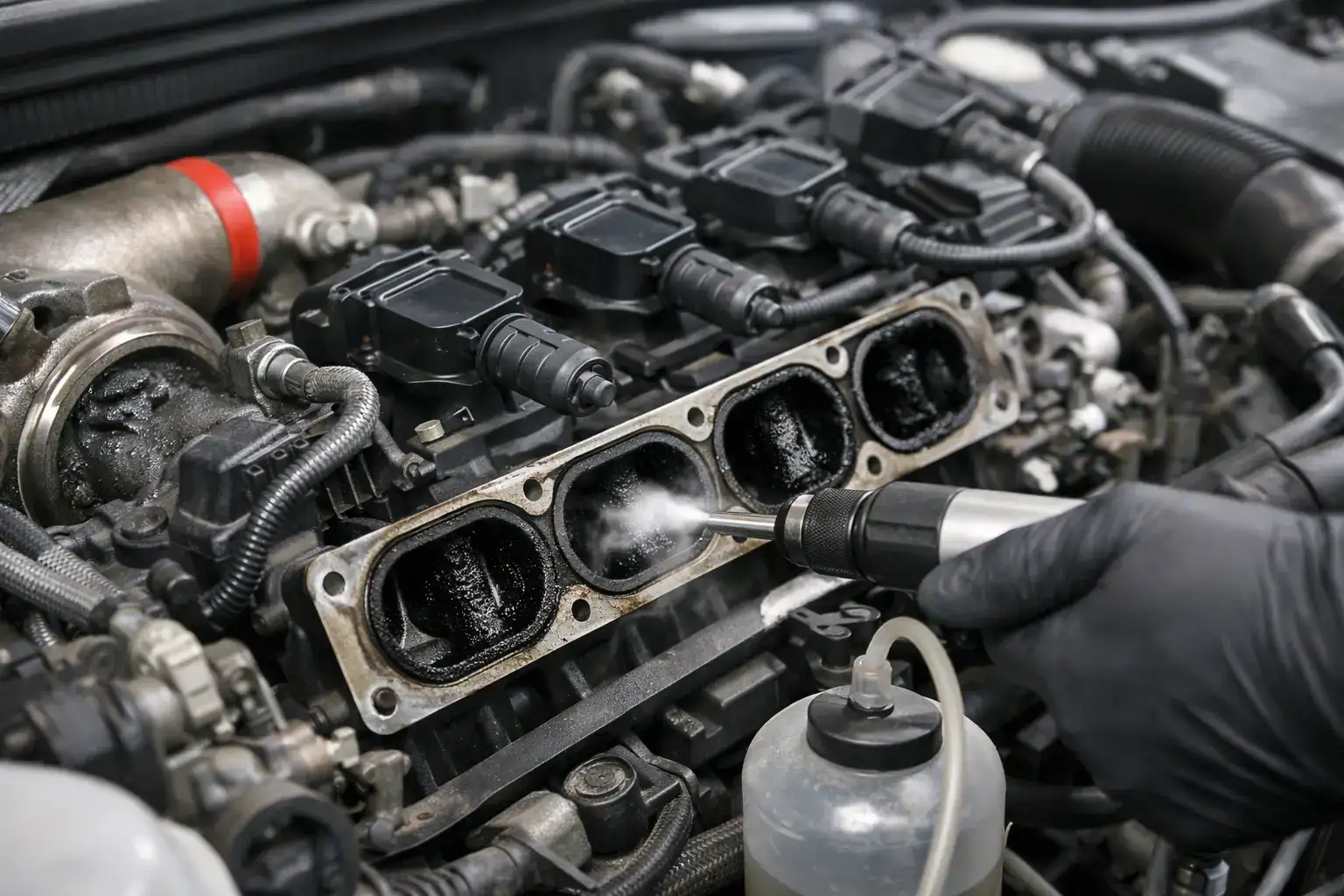
If your Volkswagen Tiguan has started feeling sluggish on the climb up US-50 or hesitates when merging onto I-79 near Clarksburg, the culprit might not be what you expect. Carbon buildup is a silent, slow-accumulating problem in direct-injection engines that can quietly rob your Tiguan of the power and efficiency you bought it for. Here’s how to know when it’s time to act. Dealership service for carbon cleaning typically runs $250 to $500, but ignoring it can cost two to three times more in downstream repairs.
Why VW Tiguans Are Prone to Carbon Buildup
The Tiguan’s turbocharged direct-injection engine is engineered for performance and fuel efficiency, but that design comes with a trade-off. In traditional port-injection engines, fuel sprays directly over the intake valves, naturally washing away deposits. In direct-injection engines like the Tiguan’s TSI, fuel bypasses the intake valves entirely and is injected straight into the combustion chamber.
The result? Oil vapors and combustion gases still circulate back through the intake system, but without fuel to clean them off, carbon deposits accumulate on the back of the intake valves over time. This is especially common in stop-and-go commutes through Clarksburg and along WV-33, where the engine runs at lower temperatures and shorter cycles that accelerate deposit formation.
Several driving habits and conditions make buildup worse faster:
- Frequent short trips around Bridgeport and downtown Clarksburg that never fully warm the engine up
- Extended idling in traffic along US-50 or Jerry Dove Drive during peak commute hours
- Skipping or delaying oil changes, which increases the volume of oil vapors circulating through the intake system
What Carbon Buildup Actually Does to Your Engine
Think of carbon deposits like plaque in an artery. They don’t cause a sudden blowout. They restrict airflow gradually, choking the cylinders and forcing your engine to work harder for the same output. Your Tiguan’s engine control module tries to compensate, but there’s only so much it can do. The effects show up in performance, fuel economy, and drivability, often before any warning light appears.
Most Tiguan owners begin noticing symptoms between 40,000 and 70,000 miles, though driving patterns play a significant role. Tiguans used primarily for short daily commutes in Harrison County tend to accumulate deposits faster than those logging regular highway miles on I-79.
7 Warning Signs Your Tiguan Needs Carbon Cleaning
Rough idle that wasn’t there before. If your Tiguan vibrates or shudders at red lights on Emily Drive or while waiting in the Bridgeport commuter queue, uneven airflow caused by carbon-coated valves is a likely cause. This symptom is easy to dismiss early on but tends to worsen steadily over time.
Noticeable loss of acceleration. West Virginia roads demand responsive power, whether you’re merging onto I-79 or climbing the grades heading out of Clarksburg toward Weston. If your Tiguan feels hesitant or flat when you press the accelerator, carbon deposits restricting airflow into the cylinders are a strong suspect.
Misfires or stuttering under load. Carbon buildup can cause inconsistent combustion, leading to misfires that feel like a brief stumble or shudder, particularly when accelerating uphill or at highway speeds on US-50.
Declining fuel economy. If you’re filling up more often on your Clarksburg commute without any change in driving habits, carbon-restricted airflow is forcing your engine to burn more fuel to maintain normal output.
Hard cold starts. Tiguans with significant carbon buildup often struggle to fire up cleanly on cold West Virginia mornings, especially during winter months when temperatures in Harrison County drop well below freezing.
Black smoke or sooty exhaust. Incomplete combustion caused by restricted airflow can push unburned fuel through the exhaust system, producing visible smoke or a persistent fuel smell around your vehicle.
Check engine light with misfire codes. If your diagnostic scan returns P0300-series misfire codes alongside no obvious mechanical fault, carbon buildup on the intake valves is frequently the cause and is worth investigating before replacing parts unnecessarily.
What a Professional Carbon Cleaning Involves
At Volkswagen Clarksburg, carbon cleaning is performed using walnut blasting, the industry-preferred method for direct-injection engines. Technicians remove the intake manifold to access the valves directly, then use pressurized walnut shell media to blast away hardened deposits without damaging the valve surfaces. The process typically takes two to four hours depending on deposit severity.
Here is what the service generally covers and what to expect cost-wise:
- Walnut blasting (both banks): $300 to $450
- Intake manifold inspection: $50 to $80
- Full induction service package: $350 to $500
Catching buildup early, around the 50,000-mile mark, typically keeps costs at the lower end of that range and prevents more expensive repairs down the road.
Real Tiguan Owners, Real Results 🚗
Marcus T. from Bridgeport brought his 2019 Tiguan SEL into Volkswagen Clarksburg after noticing rough idling and sluggish acceleration on his daily drive along Jerry Dove Drive. “I thought it was a fuel injector issue,” he said. “The technician explained the carbon cleaning process and I was skeptical at first, but the difference after the service was immediate. The car felt like it did when I first bought it.”
Diane R. from Clarksburg had been dealing with a persistent check engine light and P0301 misfire code on her 2020 Tiguan for weeks before scheduling a visit. After a full walnut blast service, the code cleared and the rough idle she had been living with for months was completely gone. “I wish I had come in sooner,” she told the service advisor. “It ended up being a lot more straightforward than I expected.”
What Your Tiguan Technician Wants You to Know 🔧
“Carbon buildup is one of those issues that sneaks up on you because it happens so gradually. By the time most drivers notice something is off, deposits have been building for tens of thousands of miles. The good news is that walnut blasting is highly effective and the results are immediate. I always tell Tiguan owners, if your car is past 50,000 miles and you’ve never had this done, it’s worth a conversation.”
— Daniel Kowalski, Senior VW Service Technician, Volkswagen Clarksburg
Your 30-Day Action Plan for a Cleaner, Stronger Tiguan
If your Tiguan is showing any of the warning signs above, the best move is to get ahead of it before symptoms worsen. Start by paying close attention to how your engine feels on your next few commutes along US-50 or Jerry Dove Drive. Note whether the rough idle happens consistently, whether acceleration feels flat at certain RPM ranges, and whether your fuel economy has quietly crept downward.
Here is a simple checklist to work through over the next few weeks:
- Pull up your maintenance records and confirm whether a carbon cleaning or induction service has ever been performed
- If your Tiguan is past 60,000 miles with no cleaning on record, schedule an intake inspection right away
- Track your fuel economy and idle behavior over the next two weeks and note any changes to share with your service advisor
Taking these steps now keeps the cost manageable and puts your Tiguan back to performing the way it was built to on Harrison County roads.
Schedule Your Carbon Cleaning at Volkswagen Clarksburg Today
Your Tiguan was engineered to perform, and carbon buildup should not be what holds it back. Whether you are dealing with a rough idle, sluggish acceleration, or a check engine light that will not go away, the service team at Volkswagen Clarksburg has the tools and expertise to restore your engine’s performance the right way. Stop by the dealership at 730 Lodgeville Rd, Bridgeport, WV 26330 or schedule your appointment online today and get your Tiguan running the way it should.
0 comment(s) so far on Signs Your VW Tiguan Needs a Carbon Cleaning: Restoring Power for WV Commutes