


Is It Time to Replace Your VW Battery After Winter?
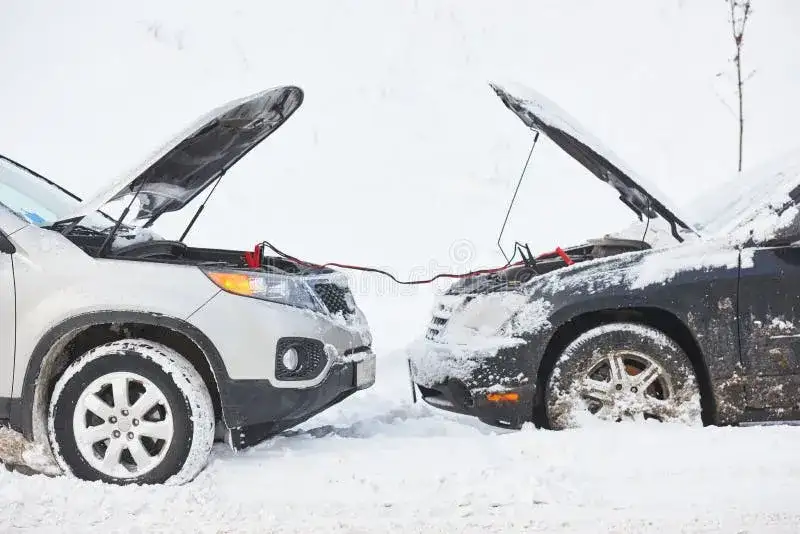
Last month, a Golf GTI came in from Shinnston after its owner had noticed slow cranking on cold mornings since January but kept dismissing it as normal winter behavior. He assumed once the temperatures warmed up the problem would resolve on its own. By March, the battery failed completely in the parking lot off Emily Drive in Bridgeport, leaving him stranded and waiting for a jump start before the tow to our Lodgeville Road location. The battery load test he should have scheduled at the first sign of slow cranking? $0, complimentary with any service visit. The emergency tow, diagnostic, and battery replacement after the failure? $480.
That scenario plays out across Harrison County every spring with reliable consistency. The battery that struggled through January and February doesn’t recover when April arrives. It fails, usually at the worst possible moment, because cold weather didn’t create the problem so much as it revealed one that was already developing.
Bridgeport and Clarksburg VW owners tend to notice the symptoms of a weakening battery through winter and rationalize them the same way. Slow cranking feels like a cold-weather quirk. A single jump start feels like a one-time event. The interior lights that dim briefly during startup seem too minor to mention. By the time spring arrives and the temperature excuse disappears, the battery that was marginal in December is failing in March, and the window for a planned, convenient replacement has closed.
Understanding what West Virginia winters actually do to automotive batteries, what the warning signs mean, and when replacement makes sense versus when a test is sufficient gives Clarksburg-area VW owners a clear framework for making the right call before the decision gets made for them on the side of US-50.
What Cold Weather Does to Your VW Battery
A car battery doesn’t just start your engine. On a modern Volkswagen, it powers the entire electrical ecosystem that keeps the vehicle’s systems running, from the engine management unit and fuel injection to the infotainment system, the heated seats, the EyeSight cameras on equipped models, and the stop-start system that cycles the engine at every red light on Emily Drive.
Understanding what cold weather does to that battery starts with basic chemistry. A lead-acid battery generates electricity through a chemical reaction between lead plates and sulfuric acid electrolyte. That reaction is temperature-sensitive. At 32 degrees, a battery delivers roughly 80 percent of its rated capacity. At 0 degrees, that figure drops to approximately 50 percent. Harrison County winters regularly deliver overnight temperatures in the single digits, meaning the battery that starts your GTI or Tiguan on a January morning in Bridgeport is doing so at half its designed capacity.
The Double Demand Problem
Cold weather doesn’t just reduce battery capacity. It simultaneously increases the demand on the battery. A cold engine requires more current to crank because cold oil is thicker and creates more resistance to the starter motor. The cabin heating system, seat heaters, rear defroster, and headlights all draw from the battery in the early minutes of a winter drive before the alternator fully takes over the electrical load. The battery that has less to give is being asked to give more, and that combination is what separates a battery that was adequate last summer from one that fails to start the car in January.
What This Means for VW’s AGM Batteries
Many modern Volkswagen models, including the Golf, Jetta, Tiguan, Atlas, and ID.4, use Absorbent Glass Mat batteries rather than conventional flooded lead-acid units. AGM batteries are specified for these vehicles because they handle the deeper charge cycling that VW’s stop-start system and regenerative braking functions require. They also tolerate cold weather better than conventional batteries, but they are not immune to winter degradation, and they carry a specific requirement worth knowing: AGM batteries must be replaced with AGM batteries. Installing a conventional lead-acid replacement in a VW that came from the factory with AGM specification will cause premature failure and can affect the vehicle’s battery management system. 🔧
The West Virginia Factors That Accelerate Battery Wear
Battery service life in Harrison County compresses relative to what manufacturers publish as average expectations, and the reasons are specific to how Bridgeport and Clarksburg drivers actually use their vehicles through a West Virginia winter.
Short-trip driving is the single biggest accelerant of battery degradation in suburban driving environments. A battery that starts a cold engine draws a significant charge in the first few seconds of operation. The alternator needs several minutes of highway-speed driving to fully replenish that charge. A driver who starts their VW on Lodgeville Road and drives five minutes to a Bridgeport parking lot never gives the alternator enough time to complete that replenishment. Repeated across a full winter of short local trips, this pattern keeps the battery in a chronically undercharged state that accelerates plate sulfation and permanently reduces capacity.
The I-79 commute corridor between Bridgeport and Clarksburg involves enough stop-and-go traffic, particularly during the morning backup at the US-50 interchange, that stop-start equipped VW models cycle the engine repeatedly in conditions where the battery is already cold and undercharged. Each stop-start cycle draws a small charge event from the battery, and the cumulative load across a winter commute season adds meaningful stress to a battery that short-trip driving is already keeping at reduced capacity.
An Atlas owner from Clarksburg came in last February after his stop-start system had disabled itself and a battery warning had appeared on the instrument cluster. He commuted daily between Clarksburg and Bridgeport, a drive of less than ten minutes each way, and had been doing so for three winters on the original factory battery. The battery had reached the end of its service life through exactly the short-trip sulfation pattern described above. Replacement with the correct AGM unit ran $340. Had the battery management system fault been left unaddressed, the downstream electrical diagnostics it was generating would have added $180 to $240 in additional diagnostic time to the appointment.
Warning Signs Your VW Battery Needs Attention This Spring
Battery failure rarely arrives without warning. The signals are easy to dismiss individually, but together they tell a clear story about a battery that is approaching the end of its reliable service life.
Slow or labored engine cranking on cold mornings, where the starter sounds like it’s working harder than usual before the engine catches, is the earliest and most consistent warning sign that battery capacity has degraded below the level needed for confident cold-weather starting.
A single jump start event should never be treated as a one-time anomaly and forgotten. A healthy battery in a properly functioning charging system does not need jump starts. One jump start is a diagnostic prompt, not a minor inconvenience.
The stop-start system disabling itself on a VW equipped with this feature is the vehicle’s battery management system communicating directly that battery state of charge is insufficient to support engine cycling. This is a built-in warning mechanism, not a software glitch.
Dimming interior lights or instrument cluster during engine cranking indicates the battery is dropping voltage significantly under starter load, a sign of reduced capacity and internal resistance that has increased beyond normal limits.
A battery or electrical warning light on the instrument cluster warrants a same-week diagnostic visit. VW’s battery management system monitors state of health continuously, and a warning indicator means the system has detected a condition outside acceptable parameters. 🔧
Visible corrosion on battery terminals, the white or blue-green crystalline buildup around the positive and negative posts, indicates electrolyte leakage or terminal oxidation that is increasing resistance in the charging circuit and accelerating battery degradation.
A battery older than four years in West Virginia driving conditions deserves a load test regardless of whether symptoms are present. Industry data consistently shows battery failure rates climb significantly after the four-year mark, and the short-trip, cold-weather pattern common in Bridgeport compresses that timeline further.
Battery Test vs. Battery Replacement: Making the Right Call
Not every VW that struggled through a Harrison County winter needs an immediate battery replacement. The load test is the tool that separates a battery with remaining service life from one that needs to come out before it fails.
A battery load test applies a controlled discharge current to the battery and measures how well the battery maintains voltage under that load. It takes approximately five minutes and is complimentary with any service visit at our Lodgeville Road location. The result is a clear, objective measurement of current battery health that removes the guesswork from the replacement decision.
Cost comparison for the proactive approach versus the reactive one:
Proactive spring battery assessment:
- Battery load test: complimentary with service visit
- Battery replacement if load test indicates end of service life: $180 to $340 depending on group size and AGM specification
- Smart proactive total: $180 to $340 planned and convenient
Reactive approach after battery failure:
- Emergency roadside assistance or tow: $85 to $150
- Battery replacement under unplanned circumstances: $180 to $340
- Additional diagnostic time if battery management system fault codes were generated: $120 to $180
- Total reactive cost: $385 to $670
Your savings from a proactive spring test: $205 to $330, plus the considerable non-monetary cost of being stranded in a Bridgeport parking lot on a Tuesday morning when you have somewhere to be.
“What I tell every customer who mentions slow cranking is that a battery telling you it’s struggling in January is giving you a gift,” says Kevin Albright, Senior VW Service Technician at the Lodgeville Road location. “It’s giving you the option to replace it on your schedule, at a convenient time, for the normal cost of a battery. The alternative is it making that decision for you, usually on a cold morning when you’re already running late, and usually with a tow bill attached. The load test takes five minutes. There’s no reason not to know.”
Your 30-Day Battery Check Plan
This week: Pay deliberate attention to your engine’s cranking behavior on the next few cold morning starts. The moment between turning the key or pressing the start button and the engine catching should feel crisp and immediate on a healthy battery. If there’s a noticeable pause, a labored quality to the starter, or a sound that feels different from what you remember last summer, that observation is worth acting on this week rather than filing away.
Within two weeks: Check your battery’s age if you know it or can find the original purchase or installation date. VW factory batteries typically carry a 36-month free replacement period and up to 84-month prorated coverage, but that warranty coverage doesn’t extend the battery’s reliable service life beyond what West Virginia driving conditions allow. If your battery is past three years old and has spent those years on short-trip Bridgeport commuting, the load test conversation is timely regardless of whether symptoms have appeared.
By month’s end: Schedule a service appointment at the Lodgeville Road location and request a battery load test alongside any other due services. Our VW-certified technicians will test your current battery against its rated capacity, inspect terminal condition and charging system output, and give you a clear recommendation based on measured data rather than guesswork. Bundling the load test with your spring oil change or tire rotation means the battery assessment adds no additional time to your visit.
These three steps take less than 20 minutes of your actual time and can prevent the kind of stranded-in-a-parking-lot situation that no Harrison County schedule has room for.
West Virginia winters reveal battery condition honestly and without sentiment. The battery that made it through January and February may have done so on reserves it no longer has. Spring is the right time to find out while the finding is still on your terms.
Schedule Your Battery Test Today
The Shinnston GTI owner from the opening replaced his battery at our Lodgeville Road location two weeks after the tow, set a reminder for a load test the following February, and hasn’t thought about his battery since. He came in last January, passed the load test with capacity to spare, and drove out in ten minutes knowing his battery was solid for another season. One five-minute test, total peace of mind.
At Volkswagen Clarksburg, our certified VW technicians test and replace batteries with the correct AGM and conventional specifications for every model in the VW lineup. Whether your battery is showing symptoms, approaching the four-year mark, or simply hasn’t been tested since purchase, we’ll give you an honest load test result and a clear recommendation with no pressure attached.
Schedule your battery test or spring service today by contacting our service department or booking online. You’ll find us at 730 Lodgeville Rd, Bridgeport, WV 26330.
A healthy battery protects every electrical system in your Volkswagen, prevents the stranding event that a failed battery inevitably produces, and ensures every West Virginia morning starts the way it should. That is what a five-minute spring battery check delivers.
0 comment(s) so far on Is It Time to Replace Your VW Battery After Winter?