


How Road Salt and Moisture Can Affect Your VW’s Brakes and Suspension
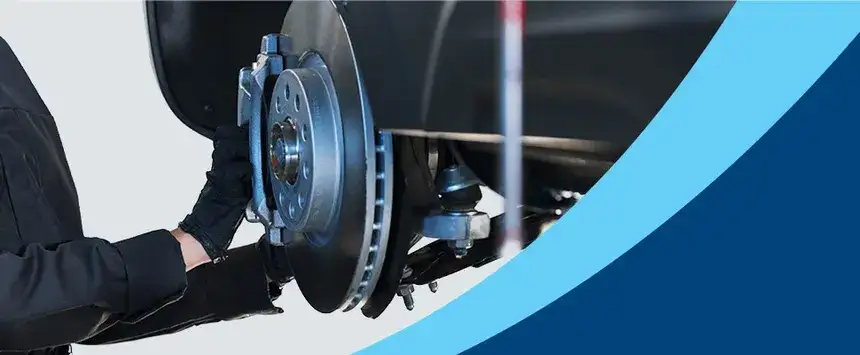
Last month, a 2019 Volkswagen Tiguan came into our shop with grinding brakes and a clunking noise from the front suspension. The owner had driven through two winters without a single undercarriage wash after salt exposure. After 28,000 miles, the rear brake calipers were seized, and the front control arm bushings had deteriorated from salt contamination. The brake caliper replacement and suspension work cost $1,850. The preventive undercarriage maintenance and brake inspections they skipped? Around $250 spread across two years.
If you drive a Volkswagen in Bridgeport, you already know our winters bring something more challenging than just snow. Between November and March, Harrison County roads get coated with salt and chemical deicers every time temperatures drop. Route 50, I-79, and Lodgeville Road all receive heavy salt treatments that keep us safe during winter storms.
But here’s what most VW owners don’t realize: that same road salt saving you from sliding off the road is simultaneously attacking your vehicle’s most critical safety systems. Your brakes and suspension components are taking a chemical beating every time you drive through slush, and the damage happens faster than you’d expect.
This isn’t about scaring you. It’s about understanding why your Volkswagen needs different care in West Virginia than it would in, say, Arizona. We’ll walk through exactly how salt and moisture damage these systems, what warning signs to watch for, and the specific maintenance steps that protect your investment without breaking your budget.
How Road Salt Attacks Your Volkswagen’s Critical Components
Road salt doesn’t just sit on your VW’s undercarriage looking ugly. It creates an electrochemical reaction with metal components that accelerates corrosion at a rate that surprises most drivers. Modern Volkswagens use sophisticated brake and suspension systems with tight tolerances, and salt intrusion disrupts how these systems function.
Your brake calipers contain pistons that need to move smoothly to apply proper pressure to your brake pads. When salt residue builds up around these pistons and their protective boots, it causes two problems. First, the salt acts as an abrasive that wears down the rubber boots protecting the piston seals. Second, once those boots crack or tear, salt-contaminated moisture enters the caliper itself, corroding the piston and causing it to stick or seize.
We see this consistently on Volkswagen Jettas and Passats that spend winters navigating the hills around Bridgeport. A seized caliper doesn’t just fail to brake properly. It can lock partially engaged, creating uneven brake wear, reduced fuel economy from constant drag, and overheated brake components that fail catastrophically.
What Happens to Suspension Components
Your VW’s suspension uses rubber bushings, ball joints, and tie rod ends that allow controlled movement while maintaining precise wheel alignment. These components have protective boots and seals designed to keep lubricant in and contaminants out. Salt breaks down these rubber components faster than normal wear ever could.
When salt-contaminated water gets past a torn ball joint boot, it washes away the grease that allows smooth movement and prevents metal-on-metal contact. The result is a ball joint that develops play, creating clunking noises, poor handling, and eventually a dangerous separation that could cause you to lose control of your vehicle.
The control arm bushings on Volkswagen models are particularly vulnerable because they’re positioned where road spray hits them directly. Salt accelerates the deterioration of these rubber bushings, leading to excessive suspension movement, alignment problems, and uneven tire wear that costs you hundreds in premature tire replacement.
The Warning Signs Most VW Owners Miss Until It’s Too Late
A Volkswagen Atlas owner brought her SUV in last winter complaining about a “weird pulling” when braking. She’d noticed it for about three weeks but assumed it was just the snowy roads. The inspection revealed her right rear caliper had partially seized from salt corrosion. The uneven braking had also worn her brake pads unevenly, turning what should have been a $380 caliper replacement into a $720 job that included rotors and pads on both sides.
The challenge with salt damage is that early symptoms feel subtle. Your brain adapts to gradual changes in how your VW handles or brakes. By the time something feels obviously wrong, you’re often looking at significant repair costs rather than simple preventive maintenance.
Visual warning signs you can check yourself include rust-colored staining around your wheels, which indicates brake dust mixed with corrosion. Check for any white or brownish crusty buildup on suspension components visible through your wheel spokes. If your VW’s undercarriage looks like it’s been coated in brownish-white residue, that’s salt and corrosion working together.
Performance symptoms that require immediate attention start with any grinding, squealing, or metal-on-metal sounds when braking, which signal advanced brake wear or caliper problems. Pulling to one side during braking, even slightly, indicates uneven brake operation that often traces back to salt-damaged calipers. Clunking sounds over bumps, especially when turning, point to suspension component wear that salt accelerates dramatically.
Your steering wheel providing feedback it didn’t before, like vibration during braking or looseness when driving straight, suggests suspension or steering components have developed excessive play from deteriorated bushings or joints. Don’t ignore these signs hoping they’ll resolve themselves.
Why West Virginia Winter Conditions Create the Perfect Storm
Bridgeport sits in a climate zone that creates maximum damage potential for your Volkswagen’s brake and suspension systems. We don’t stay consistently frozen all winter, and that freeze-thaw cycle is actually worse for your vehicle than constant cold would be.
When temperatures hover around freezing, like they do throughout much of our winter, road salt remains wet and active on your vehicle’s undercarriage. It doesn’t freeze solid or dry out. It stays in that chemically active state where it’s most corrosive. Drive through salty slush on I-79 in the morning when it’s 35 degrees, and that contamination sits on your brake calipers and suspension components all day, actively corroding metal surfaces.
The hills around Harrison County create another problem. When you descend grades on Route 50 or navigate the elevation changes around Bridgeport, your brakes work harder and generate more heat. Hot brake components meeting cold, salty road spray creates thermal shock that accelerates the breakdown of protective coatings and seals.
Our humidity levels compound the issue. Even when roads are clear, moisture in the air keeps salt residue active on your vehicle’s undercarriage. That’s why you can’t just wait for spring rain to “wash away” winter salt. By then, the damage is already happening.
The Hidden Cost of Doing Nothing
Her cost breakdown:
- Seized rear brake caliper replacement: $720
- Front control arm bushing replacement (both sides): $680
- Alignment after suspension work: $130
- Premature tire replacement from alignment issues: $620
- Total cost of “just dealing with winter”: $2,150
What she should have done:
- Monthly undercarriage wash during winter: $240 (8 washes)
- Two brake inspections: $0 (included with oil changes)
- Early boot replacement on ball joint: $180
- Smart total: $420
Her actual loss from postponing maintenance: $1,730. That’s not even accounting for the inconvenience of being without her vehicle for two days while we completed repairs, or the safety risk she unknowingly took driving with compromised braking.
Your Volkswagen-Specific Vulnerability Points
Different Volkswagen models have specific weak points when it comes to salt and moisture damage. Understanding your particular model helps you know what to monitor most carefully.
The Volkswagen Tiguan and Atlas, being heavier SUVs, put more stress on suspension components during winter driving. Their ball joints and control arm bushings wear faster when salt contamination removes protective lubricants. We see more frequent suspension issues on these models after harsh winters around Bridgeport.
Jetta and Passat models have brake calipers positioned in ways that catch more road spray, particularly the rear calipers. The parking brake mechanism integrated into these calipers can seize from salt corrosion, creating that grinding noise many owners report after winter. The parking brake cables themselves are vulnerable to salt damage where they route under the vehicle.
The Volkswagen Golf and GTI use sophisticated multi-link rear suspension designs with more bushings and pivot points than simpler designs. More pivot points means more opportunities for salt intrusion and more potential failure points. These models benefit significantly from regular undercarriage washing and suspension inspections.
“We see VW owners skip undercarriage cleaning because it seems unnecessary when their vehicle looks clean on the outside,” says Mike Richardson, Senior Technician at our Lodgeville Road location. “But salt doesn’t care how shiny your paint is. It’s working around the clock on components you can’t see from a casual walk-around. The owners who wash their undercarriages monthly during winter save thousands compared to those who wait until spring.”
Protecting Your Investment: The Maintenance That Actually Matters
Preventing salt and moisture damage doesn’t require expensive treatments or complicated procedures. It requires consistency and understanding which maintenance tasks provide the most protection for your specific driving patterns.
Undercarriage washing is your primary defense, but timing matters more than frequency alone. The most effective schedule is washing within 24 to 48 hours after driving through heavy slush or after roads receive fresh salt treatment. If you commute on I-79 or Route 50 during winter storms, plan for an undercarriage wash that weekend or early the following week.
A proper undercarriage wash uses pressurized water to remove salt from brake components, suspension parts, and the vehicle’s underbody. This isn’t the same as a regular car wash that focuses on exterior panels. Make sure any facility you use specifically includes undercarriage cleaning in their winter wash packages.
Brake inspections every six months become critical during winter months. These inspections check caliper operation, measure pad thickness, examine rotor condition, and most importantly, inspect caliper boots and hardware for early signs of salt damage. Catching a torn caliper boot before salt contaminates the piston can save you $500 to $700 in caliper replacement costs.
Suspension inspections should happen annually at minimum, but consider adding a mid-winter check if you’ve driven through particularly harsh conditions. These inspections examine ball joint boots, tie rod end boots, control arm bushings, and sway bar links for early deterioration. Replacing a $180 ball joint boot is vastly preferable to replacing a $450 ball joint assembly after salt has destroyed the internal components.
Think about what your Volkswagen means to your daily life. It gets you to work safely when Bridgeport roads are sketchy. It transports your family through Harrison County winters. It represents a significant financial investment you’re still paying for or that you’re hoping will last another 100,000 miles. Salt and moisture damage threatens all of that, but it’s completely preventable with the right maintenance approach. 🔧
Your 30-Day Winter Protection Plan
This week: Schedule an undercarriage wash if you’ve driven through salted roads in the past week. Call ahead to confirm the facility includes undercarriage cleaning, not just exterior washing. While you’re there, do a visual inspection through your wheel spokes looking for any obvious rust staining or white salt buildup on visible brake and suspension components. Take photos with your phone so you can compare what things look like a month from now.
Within two weeks: Check your maintenance records to confirm when your brakes and suspension were last professionally inspected. If it’s been more than six months, schedule an inspection with our service department. During winter months, we specifically look for salt-related damage that might not be obvious during a summer inspection. This inspection should include checking all caliper boots, suspension component boots, and brake hardware for corrosion. Ask the technician to show you any concerns they find so you understand what early-stage salt damage looks like.
By month’s end: Establish a winter undercarriage washing schedule based on your driving patterns. If you commute daily on salted highways, plan for washing every two weeks during active winter months. If you drive less frequently or mostly on treated residential streets, monthly washing provides adequate protection. Set phone reminders so you don’t forget. These three checks take less than an hour of your time total but can prevent thousands in repair costs and, more importantly, keep your braking and suspension systems functioning safely throughout winter.
Common Myths That Cost VW Owners Money
The biggest misconception we hear is that newer Volkswagens have better rust protection that makes them immune to salt damage. Modern VWs absolutely have improved corrosion protection for body panels and frame components, but brake and suspension parts still use metal components that corrode when exposed to road salt. A 2023 model will suffer brake and suspension damage just as quickly as a 2015 model if both are driven through salted roads without proper cleaning.
Another myth is that you can wait until spring to address winter salt buildup. By April, when most people start thinking about cleaning their vehicle’s undercarriage, damage from December salt has had four months to progress. Corrosion isn’t a linear process. A small amount of rust on a brake caliper piston in January becomes a seized caliper by March if salt keeps attacking the same spot.
Some owners believe that driving in rain provides adequate undercarriage cleaning. Rain might rinse some surface salt, but it doesn’t provide the pressure needed to remove salt deposits from inside wheel wells, around brake components, or from the crevices where suspension parts mount. Only dedicated undercarriage washing with pressurized water reaches the areas where salt does the most damage.
A Volkswagen Passat owner came to us after waiting until spring to address winter salt damage. All four brake calipers required replacement due to seized pistons, both front lower control arms needed replacement from deteriorated bushings, and alignment was necessary after the suspension work. His total repair bill was $2,170.
His cost breakdown:
- All four brake calipers replaced: $1,460
- Both front lower control arms: $580
- Alignment: $130
- Total cost of “waiting for spring”: $2,170
What he should have done:
- Six undercarriage washes throughout winter: $180
- Mid-winter brake inspection catching early issues: $0 (included with service)
- One caliper boot replacement when first noticed: $95
- Smart total: $275
His savings from proactive maintenance would have been $1,895, plus avoiding the safety risk of driving with compromised brakes for two months before the grinding noise finally forced him to bring the vehicle in.
Schedule Your Brake and Suspension Inspection Today
Remember that Tiguan owner from the beginning? After we completed her repairs, she signed up for our winter maintenance program. This past winter, she brought her VW in monthly for undercarriage washes and had two inspections that caught minor issues before they became expensive problems. Her total winter maintenance cost was $340, and her brake and suspension systems are in excellent condition heading into their third winter.
The difference between expensive repairs and affordable maintenance comes down to understanding what West Virginia winters do to your Volkswagen and taking action before damage progresses beyond simple fixes. Salt and moisture don’t take breaks, and neither should your commitment to protecting your vehicle’s critical safety systems.
Our certified Volkswagen technicians at 730 Lodgeville Rd in Bridgeport use factory-grade diagnostic equipment and genuine VW parts to inspect and maintain your brake and suspension systems. We understand the specific challenges Harrison County winters create for your vehicle, and we know which components need the closest attention on each Volkswagen model.
Schedule your brake and suspension inspection today by visiting our service department or booking online through our website. We’ll provide a comprehensive evaluation of your vehicle’s current condition, show you any salt-related damage we find, and recommend the specific maintenance steps that protect your VW through the remainder of winter.
Proper winter maintenance protects your investment, prevents unexpected breakdowns during harsh weather, and ensures your Volkswagen’s braking and suspension systems keep your family safe on West Virginia roads. That’s the confidence proper service delivers.
0 comment(s) so far on How Road Salt and Moisture Can Affect Your VW’s Brakes and Suspension