


Heavy Loads & Steep Grades: Why Your VW Taos Needs Brake Inspections Before Mountain Driving
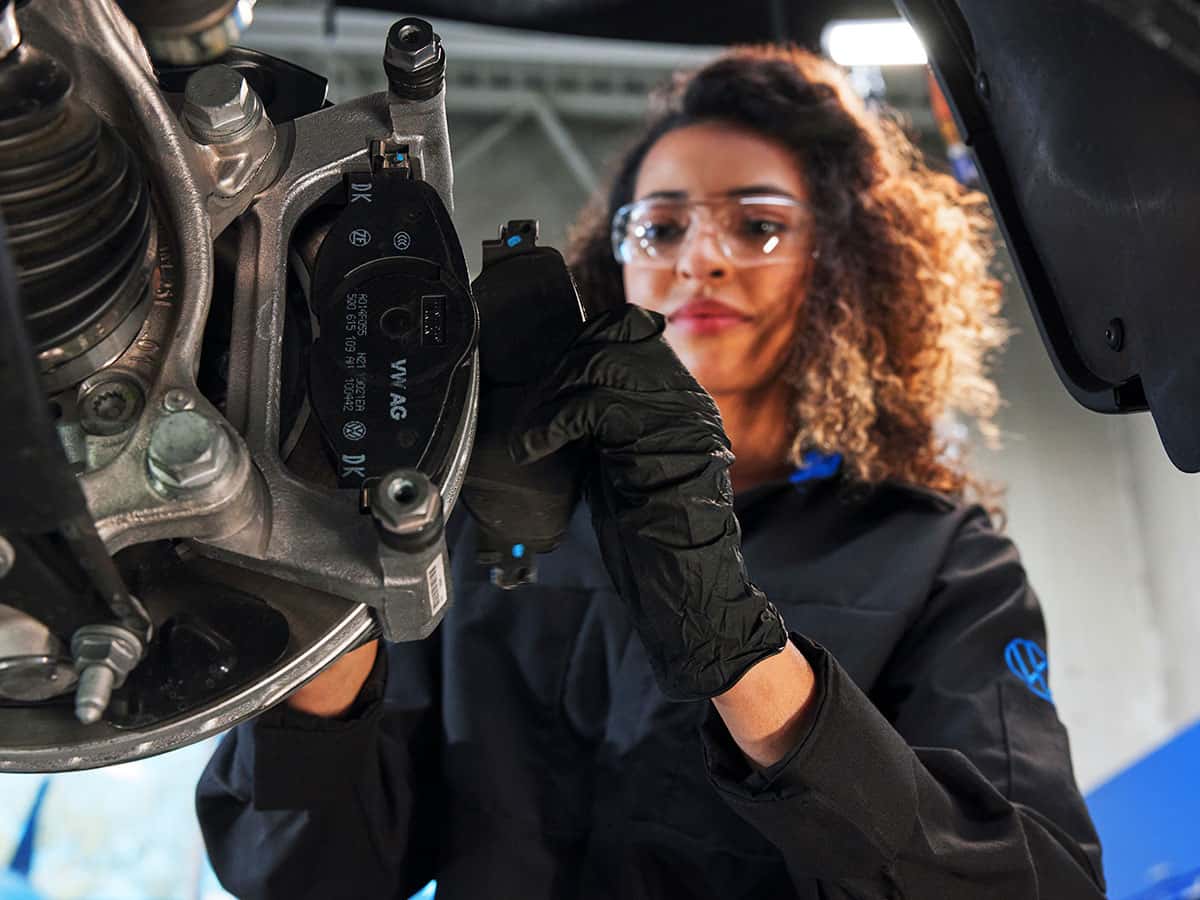
There’s nothing quite like a fall drive through the Alleghenies, with Route 33 winding toward Elkins or the long descent off Laurel Mountain opening up into a valley view that makes the whole trip worth it. But the same grades that make these drives memorable also put serious strain on your brakes, and a brake inspection that costs as little as $0 typically runs far less than the $400 to $700 it can cost to replace warped rotors and worn pads after a hard mountain descent. If your Volkswagen Taos has been sitting in the driveway since spring, now is the time to have your brake system checked before you point it toward the hills.
Clarksburg sits in a part of West Virginia where mountain driving isn’t a special occasion, it’s just Tuesday. Whether you’re heading out I-79 toward Morgantown, cutting across US-50 to Grafton, or making the climb up toward Snowshoe Mountain for a weekend trip, your brakes are doing more work than they would on flat terrain. Long descents force your brake pads and rotors to absorb and dissipate heat continuously, and if your Taos hasn’t had its brake system inspected recently, that’s a problem worth addressing before you load up the car and head for the hills.
Why Mountain Driving Is Harder on Your Brakes Than You Think
A lot of drivers assume that brakes wear evenly no matter where they drive, but that’s not how it works. On flat roads, you’re mostly using your brakes for short stops at lights and stop signs. On a steep grade, you’re often riding the brakes for minutes at a time to control your speed on the way down, and that generates a lot more heat than a quick stop ever would.
- Sustained braking on descents. Coming down a long grade like the one on Route 33 near Elkins, your brake pads can reach temperatures well above what they’d ever see on city streets. Repeated heat cycles like this accelerate pad wear and can cause rotors to warp if they’re already nearing the end of their service life.
- Increased stopping distance with elevation changes. Steep downhill sections increase the force your brakes have to manage, since gravity is now working against you instead of just rolling resistance. A brake system that’s borderline on flat ground can fail to perform the way you need it to on a descent.
- Loaded vehicles change the math. If you’re hauling camping gear, a bike rack, or extra passengers for a mountain weekend, that added weight means your brakes have even more momentum to manage on every downhill stretch.
Glenn Pruitt, a service technician at our Clarksburg location, sees this pattern every year as the weather cools and people start planning trips into the higher elevations. He says the brake inspections that come in during late summer and early fall often reveal pad wear that wouldn’t have caused a problem on local roads, but would have been a real issue halfway down a mountain grade. Catching that ahead of time, he says, is a lot less stressful than catching it on the way down.
What a Proper Brake Inspection Actually Checks
A thorough brake inspection on your Taos goes well beyond a quick glance at the pads. Here’s what our technicians typically look at:
- Pad thickness and wear pattern. Uneven wear can point to a sticking caliper or alignment issue, not just normal mileage.
- Rotor condition. Technicians check for grooving, warping, and overall thickness to make sure the rotors can still dissipate heat effectively on long descents.
- Brake fluid condition and level. Fluid that’s absorbed moisture over time has a lower boiling point, which matters a lot more on a mountain descent than it does on a flat commute.
- Caliper and hardware function. Calipers that aren’t releasing fully can cause one wheel to do more work than the others, leading to uneven wear and reduced stopping power exactly when you need it most.
- Brake lines and hoses. Cracked or deteriorating lines are a safety issue that’s easy to miss without a hands-on inspection.
Most routine brake inspections are complimentary or run a nominal fee, while a full pad and rotor replacement on a Taos typically falls somewhere between $250 and $450 per axle depending on the parts used and labor involved. Brake fluid flushes, when needed, usually run between $100 and $150. Compared to the cost of a roadside breakdown or a tow truck out of the mountains, that’s a small price for peace of mind.
Getting Your Taos Ready for the Drive
If you’re planning a trip toward Canaan Valley, Snowshoe, or even just the rolling hills along Saltwell Road on the way out of town, a few simple steps can make sure your Taos is ready:
- Schedule the inspection before you pack the car. It’s easier to address a brake issue at home than on the side of a mountain road two hours from Clarksburg.
- Mention your trip when you book. Letting the service team know you’re headed into mountainous terrain helps them tailor the inspection toward sustained braking performance rather than just everyday driving.
- Check your tires at the same time. Tire condition affects stopping distance just as much as your brakes do, especially on wet mountain roads in the fall and winter months.
- Don’t ignore early warning signs. A faint squeal, a soft pedal, or any pulling to one side under braking are all reasons to get checked out before a long trip, not after.
West Virginia’s terrain is part of what makes living and driving here so enjoyable, but it does mean your vehicle works harder than it would somewhere flatter. A Taos that’s properly maintained can handle that terrain without issue, but it does ask a little more of its brake system than most drivers realize until they’re partway down a steep grade with a loaded car.
If it’s been a while since your last brake inspection, or if you’ve got a mountain trip on the calendar, now is a good time to get it looked at. The team at Volkswagen Clarksburg, located at 730 Lodgeville Rd, Bridgeport, WV 26330, can take a close look at your Taos’s brake system and make sure it’s ready for whatever grade you’re planning to tackle next, so you can focus on the view instead of wondering how your brakes are holding up.
0 comment(s) so far on Heavy Loads & Steep Grades: Why Your VW Taos Needs Brake Inspections Before Mountain Driving