


Combating Coal Dust and Mud: High-Efficiency Engine Air Filter Maintenance for Rural West Virginia VW Drivers
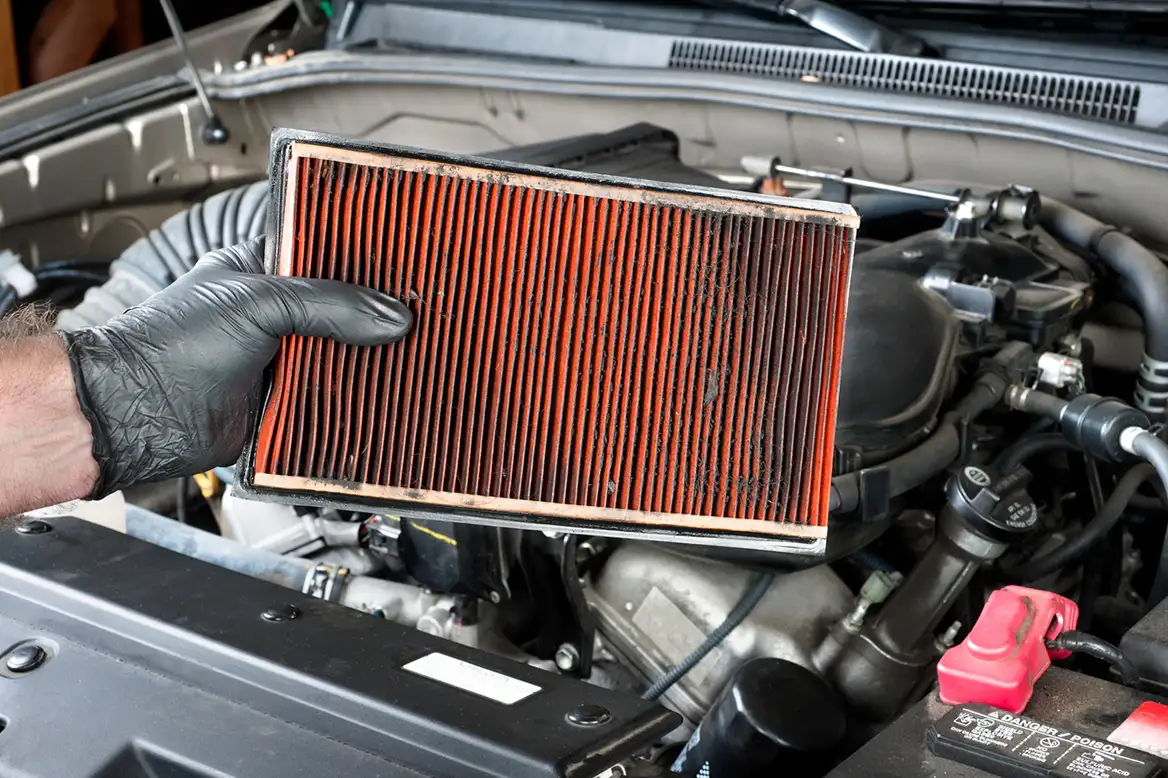
VW’s factory engine air filter interval for TSI engines is set at 60,000 miles or six years under normal driving conditions. Harrison County, West Virginia is not a normal driving environment. The Harrison County Mine Preparation Plant in Shinnston has the potential to emit over 268 tons of PM10 particulate matter per year. Add the unpaved and poorly surfaced rural roads that connect communities throughout the county, the mud seasons that West Virginia’s wet springs and falls reliably produce, and the coal haul routes that cross the same roads Clarksburg-area commuters use daily, and the air going into a VW’s intake system here carries a particulate load that standard interval assumptions never accounted for. A filter that loads up in 20,000 miles under Harrison County conditions but isn’t inspected until 60,000 will spend 40,000 miles slowly suffocating a turbocharged engine that needs clean, unrestricted airflow to perform and last.
Understanding what the local air environment actually deposits into an engine air filter, what a loaded filter costs a turbocharged VW in performance and longevity, and how to build an inspection habit matched to Harrison County conditions gives Clarksburg-area VW owners the framework to protect an engine that deserves better than a generic service calendar.
What Harrison County’s Air Puts in Your Filter
Engine air filters are designed to capture particulate matter before it reaches the intake manifold, throttle body, and ultimately the cylinder walls and piston rings. The filter media is rated to capture particles down to a specific micron range, and it does so by trapping particulate in progressively finer layers of the filter element as air passes through. The filter’s capacity to keep doing that job is finite, and it is determined by both the volume of particulate captured and the specific character of what it’s capturing.
Harrison County produces several particulate streams that are harder on air filters than the typical suburban or highway driving environment that VW’s standard interval was calibrated against.
Coal dust from the county’s active mining and preparation operations is among the most filter-unfriendly particulate types a vehicle can encounter. Coal particles are fine-grained, angular, and highly adherent to filter media. Unlike road dust, which is largely mineral-based and somewhat granular, coal dust compacts into filter fibers in a way that resists dislodging and reduces the open area of the filter element faster per unit of captured mass. The Harrison County Mine Preparation Plant alone has the permitted potential to emit hundreds of tons of PM10 annually, and that particulate disperses across the surrounding area through normal wind patterns, settling on road surfaces and becoming airborne again whenever traffic disturbs it.
Unpaved and gravel-surfaced rural roads throughout Harrison County generate their own substantial particulate load. West Virginia has thousands of miles of unpaved secondary roads connecting the rural communities and hollows that make up much of the county’s geography outside of Clarksburg and Bridgeport. A VW traveling a gravel road at normal rural speeds pulls a continuous plume of disturbed road dust through its intake system. Gravel that has been pulverized by traffic generates fine mineral dust in the sub-100-micron range that passes readily into the intake airflow and reaches the filter in high concentrations during dry summer and fall conditions.
Mud season adds a third dimension to the problem. When West Virginia’s characteristically wet springs and falls saturate unpaved road surfaces, that mineral dust becomes mud, and vehicles returning from rural roads bring dried mud into the intake airstream as it flakes from wheel wells and undercarriage surfaces. Mud that dries and enters the intake in particulate form can carry clay mineral content that is particularly adhesive to filter media and accelerates the pressure drop across the filter element faster than dry mineral dust alone.
What a Loaded Filter Does to a Turbocharged VW
The turbocharged TSI engines that power the VW Tiguan, Jetta, Golf GTI, Atlas, and Taos depend on unrestricted airflow through two distinct pathways: the intake air filter supplying clean air to the turbocharger compressor inlet, and the turbocharger itself compressing and delivering that air to the intake manifold. Both pathways are sensitive to restriction, but the consequences of restriction at the filter stage are specific and progressive.
A partially loaded filter creates increased restriction to airflow at the turbocharger inlet. The turbocharger compressor wheel, spinning at tens of thousands of RPM, must work harder to pull the volume of air the engine’s boost pressure targets demand through a restricted inlet. That additional work generates heat at the compressor stage, and the engine management system compensates for reduced air mass by adjusting fueling and, in some cases, pulling boost pressure back from target levels to protect the engine. The driver experiences this as reduced throttle response and a vague sense that the vehicle is working harder than it should on climbs out of Clarksburg on US-50 or the grades along WV-20 toward the surrounding communities.
A heavily loaded filter that has reached or exceeded its capacity creates more serious consequences. Airflow restriction severe enough to trigger a mass airflow sensor fault produces check engine codes and can push the engine management system into a protection mode that limits boost and power output. At the extreme end, a filter that has begun to bypass particulate, allowing fine dust and coal particles to pass around compromised filter media, sends abrasive material directly to the turbocharger compressor wheel and through the intake manifold to the cylinder walls. Turbocharger compressor wheel damage from abrasive ingestion is not a gradual wear item; it is a component failure that requires replacement at significant cost.
Why the 60,000-Mile Interval Doesn’t Apply Here
VW’s published 60,000-mile or six-year filter interval is established for normal driving conditions, which the owner’s manual defines around typical paved-road urban and highway use in a moderate air quality environment. Severe conditions, which include high dust environments, unpaved road driving, and areas with elevated industrial particulate, call for shorter inspection intervals that VW leaves to owner and technician judgment based on actual conditions.
Harrison County driving falls unambiguously into severe-duty territory by any reasonable reading of that guidance:
- Regular travel on unpaved or gravel-surfaced secondary roads, which are the primary access routes for many rural Harrison County properties and communities
- Proximity to active coal mining and preparation operations whose permitted particulate emissions affect ambient air quality throughout the county
- Seasonal mud conditions that introduce clay-mineral particulate into the intake airstream during spring and fall wet periods
- Coal haul truck traffic on shared roads that generates continuous road dust disturbance on routes used for normal commuting
For VW owners whose driving regularly includes any of those conditions, a filter inspection at every oil change interval is the appropriate standard, with replacement driven by actual filter condition rather than mileage. A filter inspected at 10,000 or 15,000 miles that shows heavy loading should be replaced regardless of where it sits on the standard calendar. A filter that still shows adequate airflow capacity at the same inspection can continue in service until the next check.
Inspecting the Filter: What to Look For
A VW engine air filter inspection is a quick procedure that takes a technician less than five minutes at any service visit. The filter housing is accessible without special tools on all current VW models, and the filter element’s condition is immediately visible once removed. Key indicators of a filter that needs replacement:
- Visible heavy loading on the intake face of the filter, appearing as a dark gray to black coating that covers the majority of the filter surface rather than concentrated in specific areas
- A filter face that shows dark, compacted material rather than the light gray or beige color of a filter that has captured dust without reaching capacity
- Any areas where the filter media shows physical damage, tears, or deformation that could allow unfiltered air to bypass the element
- A filter that cannot be meaningfully improved by gentle tapping to dislodge loose surface dust, indicating the media itself has captured material throughout its depth rather than just on the surface
Holding the filter up to a light source provides additional information: a filter with adequate remaining capacity allows diffuse light transmission through the media. A filter at or near capacity blocks light transmission uniformly across the element. Under Harrison County conditions, a filter showing these characteristics may arrive at that point well before the 30,000-mile mark, let alone the 60,000-mile factory interval.
The Cabin Air Filter: The Same Problem, Different Consequences
Everything the engine air filter faces in Harrison County’s coal and road dust environment, the cabin air filter faces in parallel. The cabin air filter captures the same particulate streams from the HVAC intake and keeps them out of the passenger compartment and away from the blower motor. Coal dust and fine mineral particulate from rural roads load a cabin filter on the same accelerated timeline as the engine filter, and a restricted cabin filter forces the blower motor to work against increased resistance, accelerating motor wear while also reducing the airflow available for heating and cooling.
Inspecting both filters at the same service visit adds minimal time and keeps the complete filtration picture current. For Harrison County VW owners whose routes regularly include gravel roads or areas near active mining operations, replacing both filters together when either one shows heavy loading is the most straightforward approach to staying ahead of both problems simultaneously.
The factory-trained service team at Volkswagen Clarksburg, located at 730 Lodgeville Rd, Bridgeport, WV 26330, inspects engine and cabin air filters at every service visit and can assess whether the filtration your VW’s environment demands is being adequately maintained. Schedule your service appointment and make sure your engine is breathing clean air through every Harrison County mile.
0 comment(s) so far on Combating Coal Dust and Mud: High-Efficiency Engine Air Filter Maintenance for Rural West Virginia VW Drivers