


ChatGPT in Your VW: Troubleshooting the 2026 “Natural Voice” AI assistant
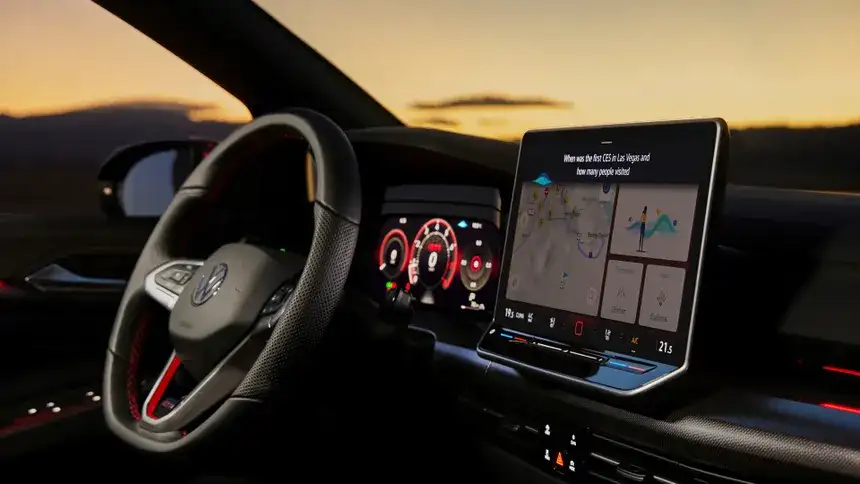
Last month, a 2026 Volkswagen Tiguan came in from Clarksburg after its owner had been experiencing consistent failures with the Natural Voice AI assistant since taking delivery two months earlier. The assistant would either fail to respond entirely or respond with significant delay on commands she used daily, including navigation requests and climate control adjustments on her commute through Bridgeport. She had assumed the system simply didn’t work well and had stopped using it entirely. When our technician connected the vehicle to VW’s diagnostic system, a software update that addressed Natural Voice response latency and connectivity handoff had been available for six weeks without being applied, and the vehicle’s cellular data connection was operating on a degraded signal profile that a connectivity module reconfiguration resolved. The software update and connectivity diagnostic at the two-month service visit? $0 as a warranty-covered software service. The six weeks of unused AI assistant capability and the frustration that accompanied it? Entirely preventable with a delivery-day software confirmation.
That pattern, a feature that feels broken because a configuration or software issue is preventing it from performing correctly, is the most consistent Natural Voice complaint we hear at Volkswagen Clarksburg from 2026 model owners. And it almost always has a resolution that doesn’t involve a hardware replacement or an admission that the technology doesn’t work. The ChatGPT integration in the 2026 VW lineup is genuinely capable when the conditions that support its performance are correctly established, and understanding what those conditions are is the practical knowledge that separates a 2026 VW owner who uses the Natural Voice assistant confidently from one who dismissed it as a gimmick after a frustrating first two weeks.
Harrison County and Monongalia County drivers who commute on I-79, navigate the mountain two-lanes around Bridgeport and Clarksburg, and deal with the cellular coverage variability that West Virginia’s ridge-and-valley geography produces face a specific set of Natural Voice performance conditions that differ from what VW owners in flat, urban, high-coverage markets experience. Understanding those conditions, and what to do when they produce less than expected performance, is the foundation for getting genuine value from one of the 2026 lineup’s most distinctive technology features.
What the 2026 VW Natural Voice Assistant Actually Is
The ChatGPT integration in the 2026 Volkswagen lineup represents a meaningful step forward from the previous generation’s voice recognition system, and understanding what changed helps explain both why it’s more capable and why its performance depends on conditions that the previous system didn’t require.
The previous VW voice assistant used on-device speech recognition with a fixed command vocabulary. It worked offline because it wasn’t connected to any external processing resource, but it was limited to the specific commands it had been trained to recognize and was inflexible in how those commands could be phrased. Drivers who used the exact phrasing the system expected got reliable results. Drivers who spoke naturally and conversationally got frequent non-recognition responses that made the feature feel unreliable.
The 2026 Natural Voice assistant uses ChatGPT’s large language model to process natural language commands, which means it understands conversational phrasing, context from previous commands in the same session, and the kind of implicit requests that a command-vocabulary system can’t interpret. Asking it to find a gas station near the next highway exit, adjust the climate system to a comfortable temperature for the current weather conditions, or explain what a dashboard warning means in plain language are all within its capability in ways the previous system couldn’t approach.
The architectural difference that makes this possible also creates the performance dependency that Clarksburg and Bridgeport VW owners need to understand: because the ChatGPT processing happens in the cloud rather than on the vehicle’s local hardware, the Natural Voice assistant requires an active, adequate-speed cellular data connection to function. When that connection is unavailable, degraded, or inconsistent, the assistant’s response quality reflects the connection quality directly.
What VW’s MIB4 Infotainment Platform Adds
The 2026 VW models carrying the Natural Voice assistant use the updated MIB4 infotainment platform, which provides the processing and connectivity infrastructure that the ChatGPT integration operates within. The MIB4 platform includes a faster processor than the MIB3 system, an updated cellular modem supporting current network bands, and a revised software architecture that manages the handoff between local vehicle functions and cloud-dependent Natural Voice processing more smoothly than the initial MIB3 ChatGPT implementation achieved.
The MIB4 platform’s software receives over-the-air updates that address Natural Voice performance, connectivity management, and the interaction between the AI assistant and the vehicle’s local control systems. Staying current on these updates is the single most important software maintenance action for 2026 VW owners who want consistent Natural Voice performance, and confirming software currency at every service visit at our Lodgeville Road location is the most reliable way to ensure updates that have been released are applied rather than pending. 🔧
Why West Virginia Creates Specific Natural Voice Challenges
The cellular coverage environment that Harrison County and Monongalia County drivers navigate creates Natural Voice performance conditions that differ fundamentally from what VW owners in major metropolitan areas experience, and understanding this difference is the most important context for Clarksburg and Bridgeport 2026 VW owners troubleshooting Natural Voice behavior.
West Virginia’s ridge-and-valley topography creates a cellular coverage map that differs from what a flat-terrain state of equivalent population produces. The valleys where Bridgeport and Clarksburg sit have adequate 4G and in many areas 5G coverage from towers positioned on the surrounding ridges. The transition zones on I-79 between Bridgeport and Morgantown, the mountain routes on US-250 through the Tygart Valley, and the secondary roads throughout Harrison and Marion Counties move through coverage transitions that the cellular modem in the MIB4 platform handles through a handoff process that affects Natural Voice responsiveness during the transition period.
A Natural Voice command issued at the moment the vehicle’s cellular connection is transitioning between towers or between coverage zones may produce a delayed response, a partial response, or a failure to respond that the driver experiences as an assistant that isn’t working. The command wasn’t processed incorrectly. It was issued during a connectivity gap that resolved within seconds, but by then the driver has already concluded the assistant failed.
Coverage Mapping and Expectation Setting for WV Routes
The practical advice for Clarksburg and Bridgeport 2026 VW owners is to develop a working knowledge of which segments of their regular routes have consistent coverage and which involve coverage transitions where Natural Voice performance will be reduced. On the I-79 commute between Bridgeport and Morgantown, there are several segments where coverage transitions occur that experienced users learn to work around by issuing commands before or after the transition zone rather than during it.
This is not a deficiency of the Natural Voice system. It is the reality of cloud-dependent processing in a geography where cellular coverage is inherently less consistent than in flat, densely developed markets. Understanding it as a coverage issue rather than a system failure prevents the premature conclusion that the feature doesn’t work and allows drivers to use it effectively within its actual performance envelope.
An Atlas owner from Weston came in last fall after describing Natural Voice as completely unreliable on his US-33 commute between Weston and Bridgeport. He had never received a consistent response to any command since delivery. Our technician identified two distinct issues: a software version that predated a connectivity handoff improvement update, and a cellular modem configuration that was attempting to maintain a 5G connection in an area where 4G provided more consistent throughput for the data volumes Natural Voice requires. The software update and modem configuration adjustment produced immediate and consistent Natural Voice performance on the segments of US-33 with adequate coverage. Both services were warranty covered and completed in a single appointment. The owner had been dismissing the feature as broken for four months.
Common Natural Voice Issues and What They Actually Mean
Understanding the specific failure patterns that 2026 VW Natural Voice users in the Clarksburg area experience most consistently helps distinguish between software and configuration issues that a service appointment resolves and usage habits that adjustment addresses without any service involvement.
Response Latency: The Three-Second Problem
The most common Natural Voice complaint we hear from Harrison County VW owners is a response delay between issuing a command and receiving a response that makes the interaction feel unnatural and unreliable. A response latency of one to two seconds is normal for cloud-processed language model responses, reflecting the time required to transmit the voice data, process it through ChatGPT’s model, and return the response to the vehicle’s audio system.
A latency of three seconds or more consistently indicates either a cellular connection quality issue, a software version with a latency bug that an update addresses, or an infotainment processor load condition where competing system processes are delaying the Natural Voice pipeline. The diagnostic distinction between these causes requires the VW diagnostic system connection at our Lodgeville Road location, which reads the cellular signal quality log, the Natural Voice response time log, and the infotainment processor load history simultaneously to identify which factor is producing the extended latency.
Wake Word Recognition Failures
The Natural Voice assistant activates through a wake word or the steering wheel voice button, and consistent failures to activate on the wake word are among the most frustrating user experiences because they prevent any interaction with the assistant regardless of cellular connection quality.
Wake word recognition in the 2026 system uses on-device processing rather than cloud processing, which means it should function regardless of cellular connectivity. Consistent wake word failures indicate either an incorrect microphone sensitivity setting, an update that includes wake word recognition improvements that hasn’t been applied, or in rare cases a microphone hardware concern that the diagnostic assessment distinguishes from a software issue.
The Bridgeport cabin acoustic environment matters here in a way that VW owners in quieter driving environments don’t encounter. The combination of road noise on the rough sections of US-50 and WV-20, HVAC fan noise during winter heating operation, and the wind noise that I-79 highway speeds produce all compete with the wake word signal the microphone is trying to detect. Reducing HVAC fan speed when issuing wake word commands and using the steering wheel button as the primary activation method in high-noise conditions are the usage adjustments that improve wake word reliability without requiring any service intervention. 🔧
Navigation Integration and Local POI Accuracy
The Natural Voice assistant’s navigation integration requests route to specific addresses or points of interest through a combination of ChatGPT’s language processing and the vehicle’s navigation system. In Harrison County and surrounding areas, the assistant’s point-of-interest database for specific local businesses, landmarks, and institutions may be less comprehensive than its coverage in major metropolitan areas, which can produce navigation requests that the assistant processes correctly but cannot fulfill with a specific address.
This is a database completeness issue rather than a system malfunction, and the practical workaround is providing a specific street address for destinations in smaller communities rather than relying on business name recognition for local Clarksburg and Bridgeport establishments. For common destination categories like gas stations, restaurants, and highway exits, the assistant’s POI coverage is generally adequate for Harrison County use.
Warning Signs Your Natural Voice Issue Needs a Service Appointment
These patterns in 2026 VW Natural Voice behavior warrant a diagnostic appointment at our Lodgeville Road location rather than continued troubleshooting through usage habit adjustments.
Consistent latency of more than four seconds on commands issued in known good-coverage areas on I-79 near Bridgeport or on the US-50 corridor where cellular coverage is adequate indicates a software, configuration, or hardware issue rather than a coverage limitation.
Complete failure to respond to any Natural Voice command regardless of location, including in the Bridgeport area where cellular coverage is consistent, indicates a connectivity module, software, or account authentication issue that the VW diagnostic system identifies specifically.
Infotainment system reboots that occur during or immediately after Natural Voice command attempts indicate a software instability that affects the MIB4 platform’s handling of the ChatGPT response pipeline and warrants a software diagnostic and update review.
Natural Voice responses that are inconsistent with the command issued, such as navigation routing to incorrect destinations or climate adjustments that don’t match the requested settings, can indicate a language model version issue or a vehicle system integration problem that an update addresses.
Wake word recognition that has degraded from delivery-day performance progressively rather than in specific noise conditions indicates a microphone sensitivity drift or a software issue rather than an environmental factor. 🔧
Data connectivity warnings in the infotainment system’s connectivity settings that persist in areas where cellular coverage is confirmed indicate a cellular modem configuration or SIM authentication issue that service resolves rather than improves with time.
The Software Update Reality for 2026 VW Natural Voice Owners
This deserves direct and clear communication: the most consistent resolution for Natural Voice performance issues in the first year of 2026 VW ownership is a software update that addresses known performance issues Volkswagen has identified and corrected after the vehicle shipped.
VW releases software updates for the MIB4 platform and the Natural Voice integration on a schedule that reflects real-world user experience across the fleet. These updates address latency issues, connectivity handoff behavior, wake word recognition improvements, navigation integration corrections, and the interaction between Natural Voice and vehicle control systems. An owner whose vehicle shipped with software version X and is now six months into ownership may be operating with a Natural Voice implementation that VW has improved through two or three subsequent updates without the owner knowing those improvements exist.
Confirming software currency at every service visit and initiating available updates while the vehicle is connected to our Lodgeville Road service network ensures the Natural Voice system is benefiting from every improvement VW has released. For a feature that depends heavily on software quality for its user experience, this is the maintenance action with the most direct impact on daily satisfaction.
Cost comparison for proactive software maintenance versus reactive diagnostic:
Proactive software maintenance approach:
- Software currency confirmation at each service visit: included with service
- Available update installation with connectivity verification: $0 warranty covered within coverage period
- Connectivity module configuration check annually: $80 to $120
- Smart proactive total: $80 to $120 annually
Reactive approach after Natural Voice performance leads to diagnostic appointment:
- Extended diagnostic session for Natural Voice performance assessment: $160 to $240
- Connectivity module reconfiguration after degraded profile develops: $120 to $180
- Software update installation outside standard service visit: $80 to $120
- Total reactive diagnostic cost: $360 to $540
Your savings from proactive software maintenance: $240 to $420 annually, plus the considerable non-monetary cost of six months of unused Natural Voice capability while the resolution waited for a diagnostic appointment to identify it.
“The Natural Voice system on the 2026 models is genuinely impressive when it’s working correctly, and the majority of the performance complaints we see have a software or configuration answer rather than a hardware one,” says Sarah Kimball, VW Technology Diagnostic Specialist at the Lodgeville Road location. “West Virginia coverage adds a layer of complexity that flat-market VW owners don’t deal with, and understanding which issues are coverage-related and which are software-related is the key to getting real value from the feature. We can read the diagnostic logs and tell you specifically which category your issue falls into in about 20 minutes. That conversation is almost always more productive than six months of assuming the feature just doesn’t work.”
Your 30-Day Natural Voice Optimization Plan
This week: Perform a deliberate Natural Voice assessment on a segment of your regular commute where cellular coverage is confirmed, specifically the I-79 corridor near Bridgeport where coverage is consistent. Issue three distinct command types: a navigation request, a climate adjustment, and an information query such as asking about current weather conditions. Note the response latency for each command, whether the responses were accurate and relevant to the commands issued, and whether the wake word or steering wheel button activation was reliable. This structured assessment gives you a specific performance baseline rather than a general impression, and it separates coverage-related performance variation from consistent system issues that warrant a service conversation.
Within two weeks: Check your 2026 VW’s current software version through the infotainment system’s About menu and compare it to the current available version listed on VW’s owner portal or the myVW app. If your vehicle is running a version behind the current release, initiate an over-the-air update while parked and connected to a stable WiFi network, either at home or at a location with strong WiFi access. Confirm the update completes successfully by verifying the version number in the About menu has advanced after the update process concludes. A failed update that didn’t complete correctly can produce the kind of system instability that makes Natural Voice behavior worse rather than better.
By month’s end: Schedule a Natural Voice diagnostic and software verification appointment at the Lodgeville Road location if your assessment identified consistent performance issues that persisted across multiple command types in confirmed good-coverage areas. Our VW technology diagnostic technicians will connect the vehicle to VW’s diagnostic system, review the Natural Voice response log, assess cellular connectivity quality and configuration, confirm software currency, and give you a specific diagnosis of any performance issues that aren’t explained by coverage geography. Bringing the specific observations from your week-one assessment makes the diagnostic conversation more efficient and more likely to identify the correct resolution on the first visit.
These three steps take less than an hour of your total time and create the diagnostic foundation that allows Natural Voice performance issues to be resolved specifically rather than dismissed generally as a technology that doesn’t work in West Virginia.
The ChatGPT Natural Voice assistant in the 2026 Volkswagen lineup represents one of the more meaningful technology advances in VW’s recent history, and the conversational capability it delivers is genuinely useful for the kind of driving that Harrison County and Monongalia County roads produce. Getting that capability consistently requires understanding what supports it and what challenges it in West Virginia’s specific cellular environment, and addressing the software and configuration factors that are within your control.
Schedule Your Natural Voice Diagnostic Today
The Clarksburg Tiguan owner from the opening had her software updated and her connectivity module reconfigured in a single warranty-covered appointment at our Lodgeville Road location. She drove home using Natural Voice navigation for the first time since delivery and has used it on every commute since. The feature she had written off as a gimmick turned out to be a software gap between delivery and the current release. One appointment, fully covered, completely resolved.
At Volkswagen Clarksburg, our VW technology diagnostic technicians service the 2026 Natural Voice system with the MIB4 platform expertise, VW diagnostic system access, and West Virginia connectivity experience that this technology-dependent feature requires in our specific market. Whether you have never gotten consistent Natural Voice performance since delivery, have a specific failure pattern you want diagnosed, or simply want software currency confirmed and your connectivity configuration optimized for WV routes, we’ll give you a specific assessment and a clear resolution path.
Schedule your Natural Voice diagnostic or technology service today by contacting our service department or booking online. You’ll find us at 730 Lodgeville Rd, Bridgeport, WV 26330.
Proper Natural Voice optimization ensures the ChatGPT integration that defines the 2026 VW technology experience performs at the standard Volkswagen engineered it to deliver, keeps your vehicle’s software current with every improvement VW has released, and ensures every commute on Harrison County roads is backed by an AI assistant that’s working the way it was designed to work. That is what a well-configured 2026 VW delivers.
0 comment(s) so far on ChatGPT in Your VW: Troubleshooting the 2026 “Natural Voice” AI assistant